
Annapolis Garage Door Guide
Is Your Annapolis Garage Door Worth Repairing, or Time to Replace It
Annapolis homes mostly date to the 1980s and 90s. Here's how to tell if your original door and opener are worth repairing or due for replacement.
- Licensed & Insured
- Same-Area Service Calls
- Upfront Pricing
The Problem
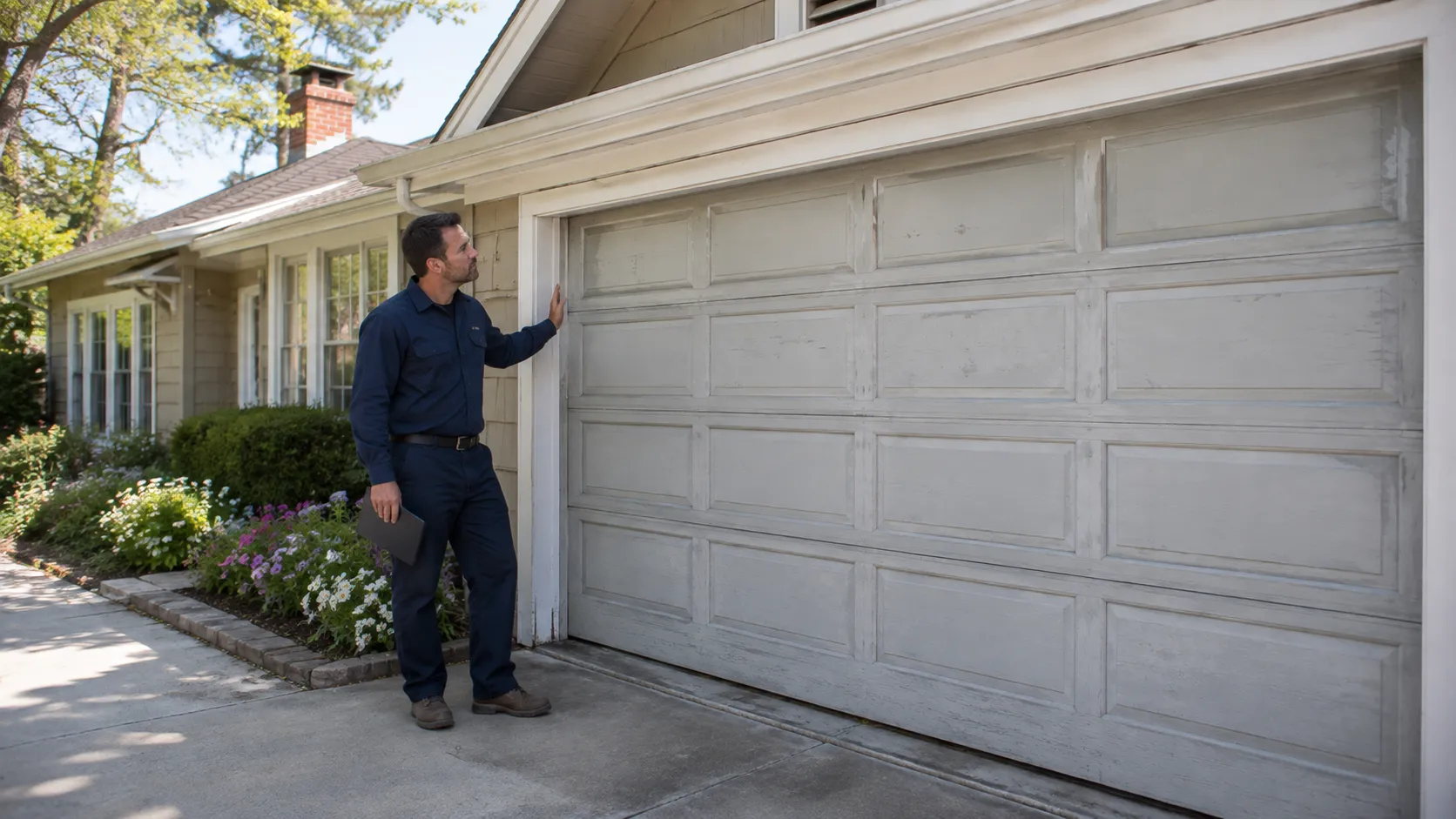
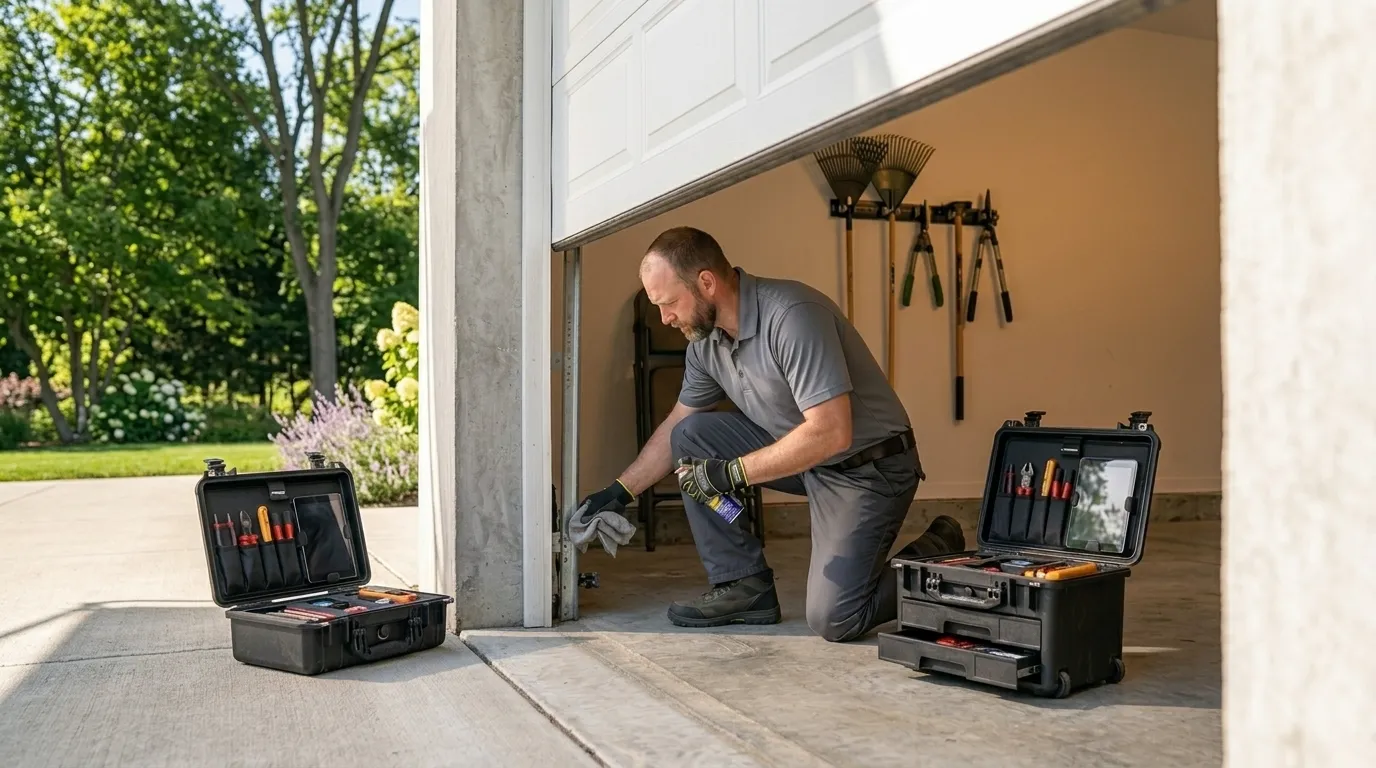
Most of the housing stock around Annapolis went up between 1955 and 2008, with the median build year sitting around 1985. That means a huge share of the doors we get called on aren't brand new units with a bent panel - they're original or first-replacement doors pushing 30 to 40 years old, often paired with an opener from the same era. The question we get asked constantly isn't "can you fix this" - almost anything can be patched for a day or two.
The real question is whether patching it is money well spent, or whether you're feeding parts into a door and opener that are near the end of their working life anyway. A torsion spring snapping on a door that's original to a 1986 build is a different conversation than the same spring on a door installed five years ago. Same failure, different math.
The steel gauge, the track spacing, and the safety sensors on doors from that era are often different enough from current stock that a repair means sourcing older hardware rather than grabbing something off the shelf, and that changes both the cost and the turnaround.
Checking It Yourself
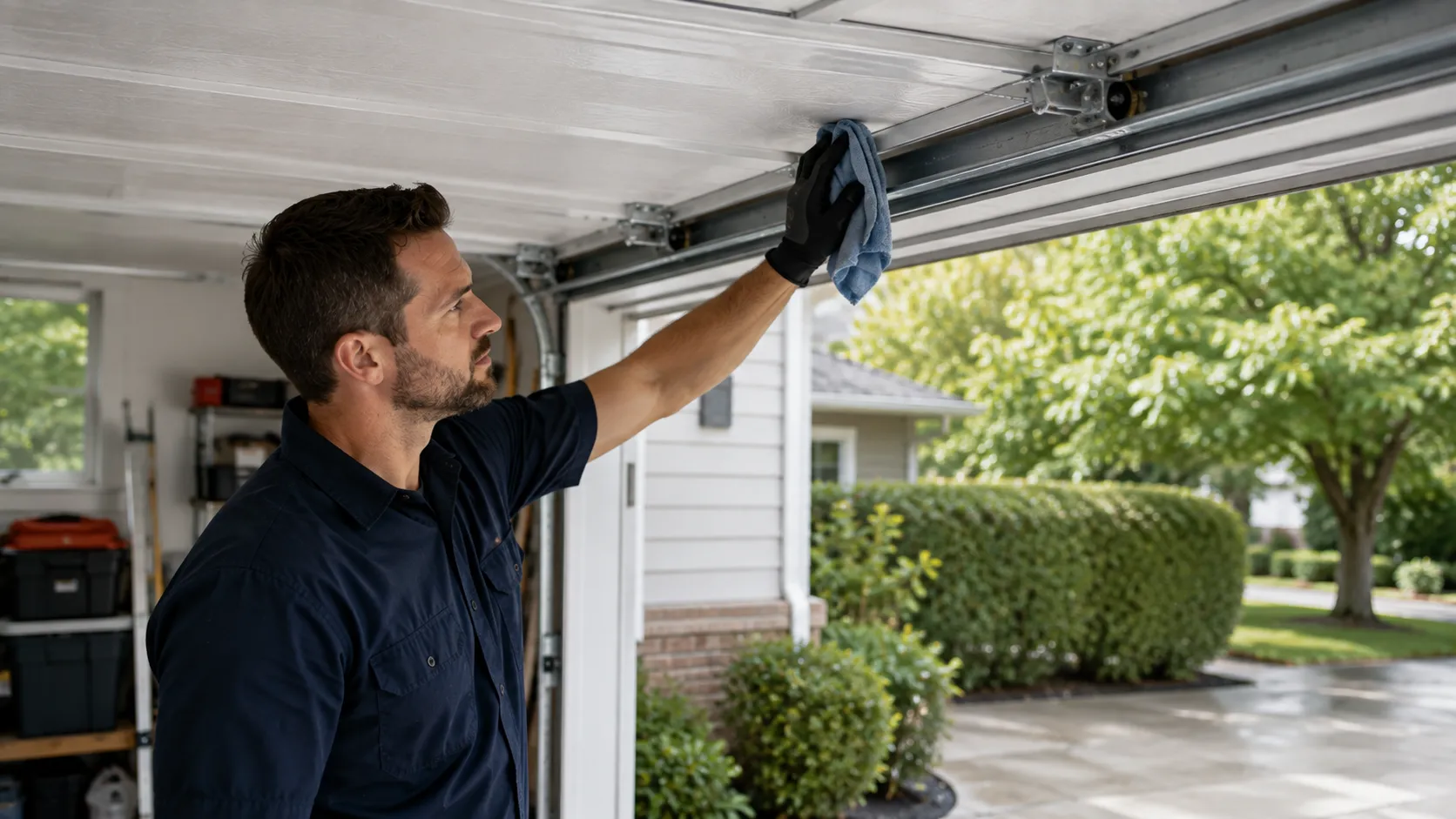
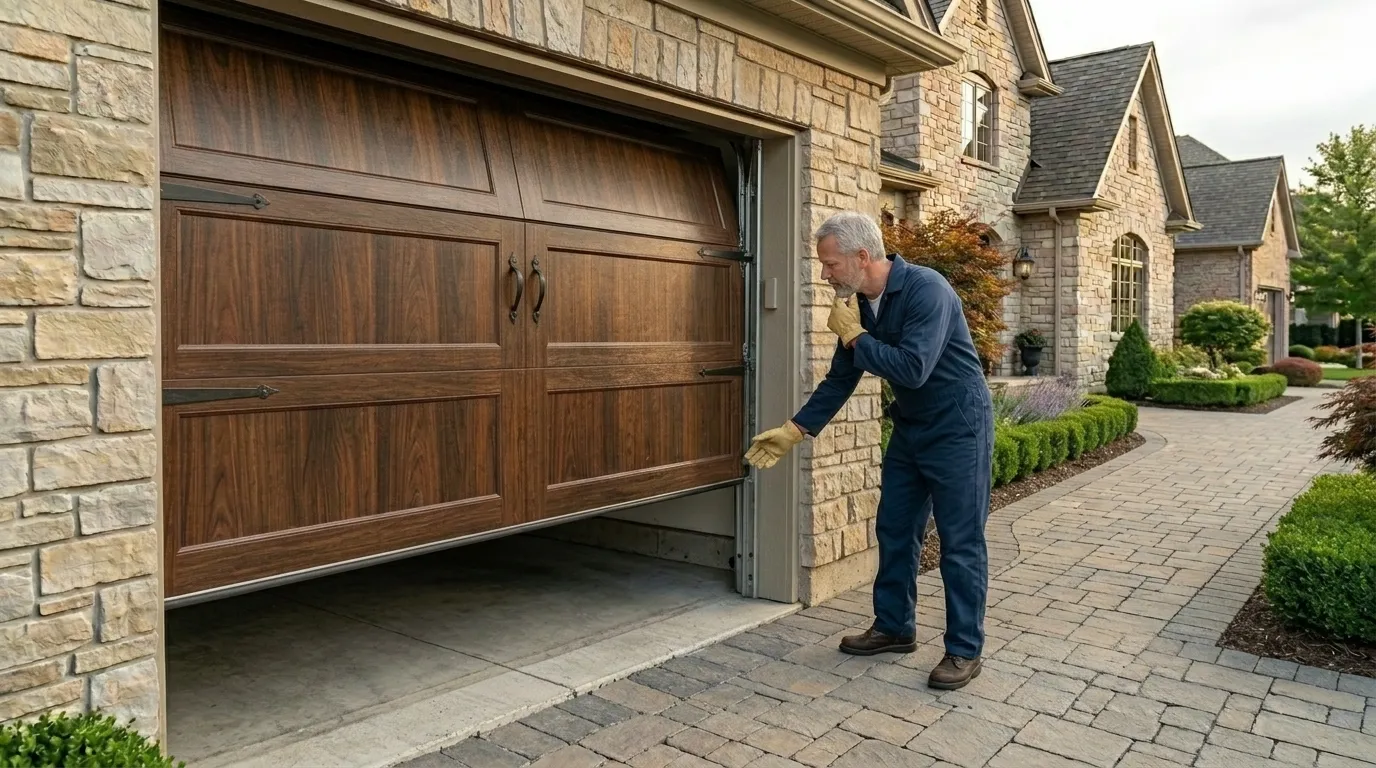
Before you call anyone, look at three things. First, the panels - on a door old enough to match the 1980s-90s stock common in this area, rust bubbling through the bottom panel or the wood core showing through cracked fiberglass is a sign the door itself, not just a part, is failing. Second, the track and rollers - if the rollers are the original steel type rather than nylon, and they're chipped or flat-spotted, that's original-era hardware wearing out on schedule, not a fluke.
Third, the opener's logic board and safety reversal - if you have to hold the wall button down for the door to close because the auto-reverse doesn't trust its own sensors, that opener predates current safety expectations and is worth a hard look rather than a patch. None of this requires tools. It requires standing in the garage with the door open and closed a few times, watching how it moves, and being honest about whether what you're seeing is a single bad part or a system that's been failing slowly for a decade.
If two or more of these show up together, you're usually looking at a replacement conversation, not a repair invoice.
Doing Nothing For Now
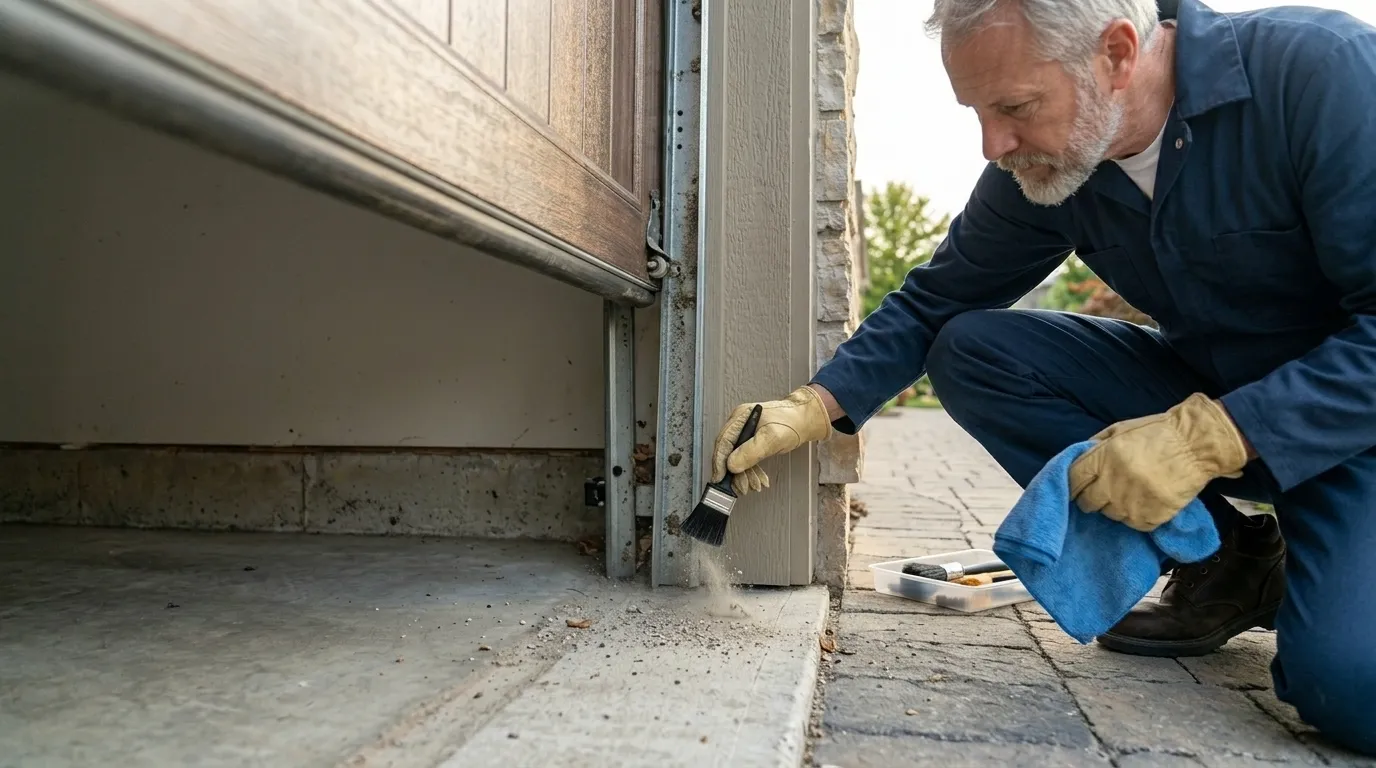
Waiting is a legitimate choice, not a mistake, provided you know what you're waiting on. A door that's stiff but still closes flush and locks properly, with an opener that reverses correctly on contact, can usually run another season without drama. What doesn't wait well is a spring under visible stress, a cable fraying at the drum, or a bottom bracket that's separating from the panel - those don't stabilize, they get worse on their own timeline, and it's not gradual.
One honest limitation: we don't stock every part for doors built in the 1970s or earlier, and if your house predates the main 1955-2008 build range that covers most of the area, a repair on an original door may mean waiting on a special-order part rather than a same-week fix. In that case doing nothing for now isn't laziness, it's often the more sensible plan until the part is in hand, as long as the door isn't actively unsafe in the meantime.
How Local Conditions Play In
Annapolis sits in a cold-moderate climate band, which matters more for garage doors than people expect. Steel contracts in winter cold and swells slightly with summer humidity off the water, and a door that's been doing that expansion-and-contraction cycle every year since the 1980s has had thirty-plus rounds of it on the same springs, hinges, and weatherstripping. That's a lot of cycles for hardware that was never rated to last forever.
On an older, original door, this shows up as stiffness on the first cold mornings of the season, or as a spring that finally lets go on a temperature swing rather than under any unusual load. It's also why we look harder at the bottom seal and the panel bottoms on older doors here than we might in a milder or drier climate - that seasonal moisture cycle accelerates rust at the point where the door meets the slab. None of this means every older door needs to go.
It means the climate has been quietly working on the same hardware for decades, and that's part of what you're actually weighing when you decide whether a repair is worth it.
How We Can Help
Garage Door Repair
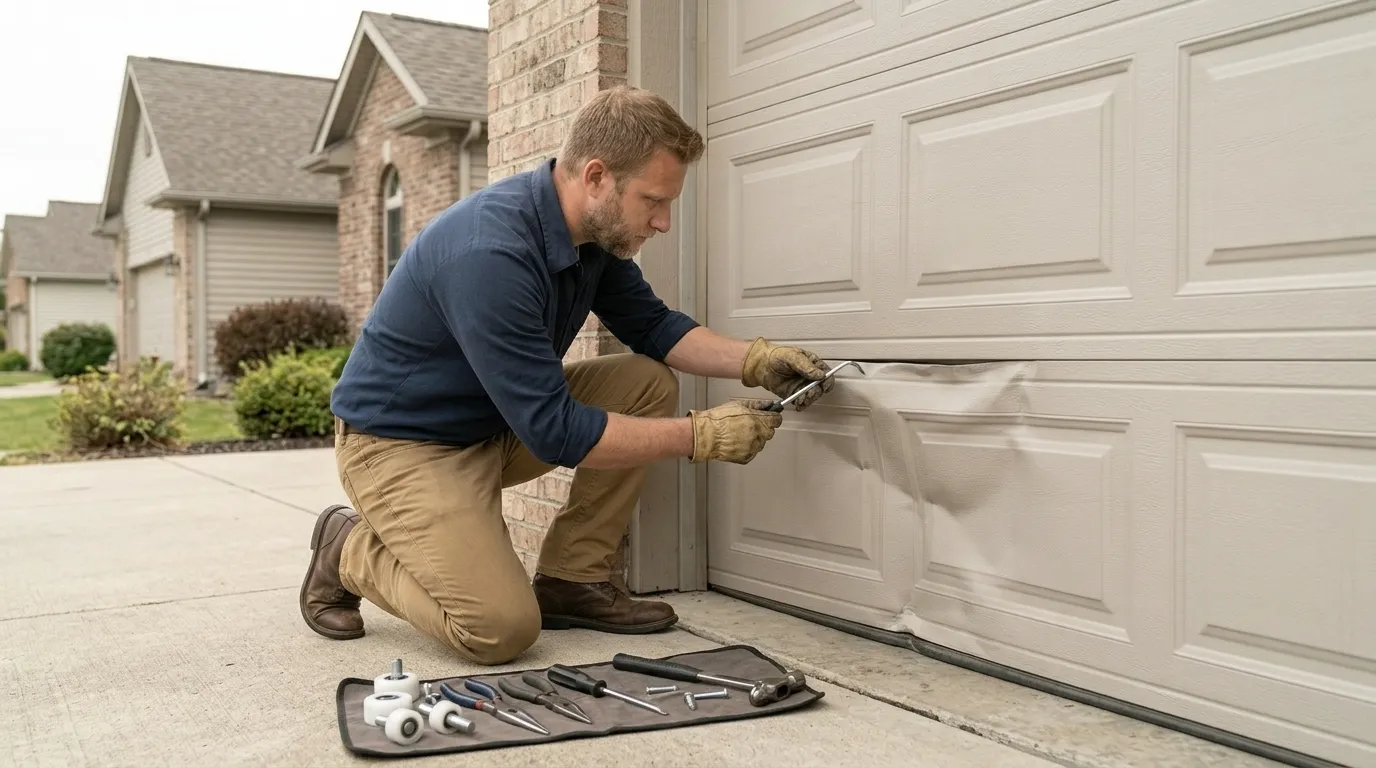
Springs, cables, tracks, rollers, and openers fixed by a tech who explains the problem before touching anything.
Learn more →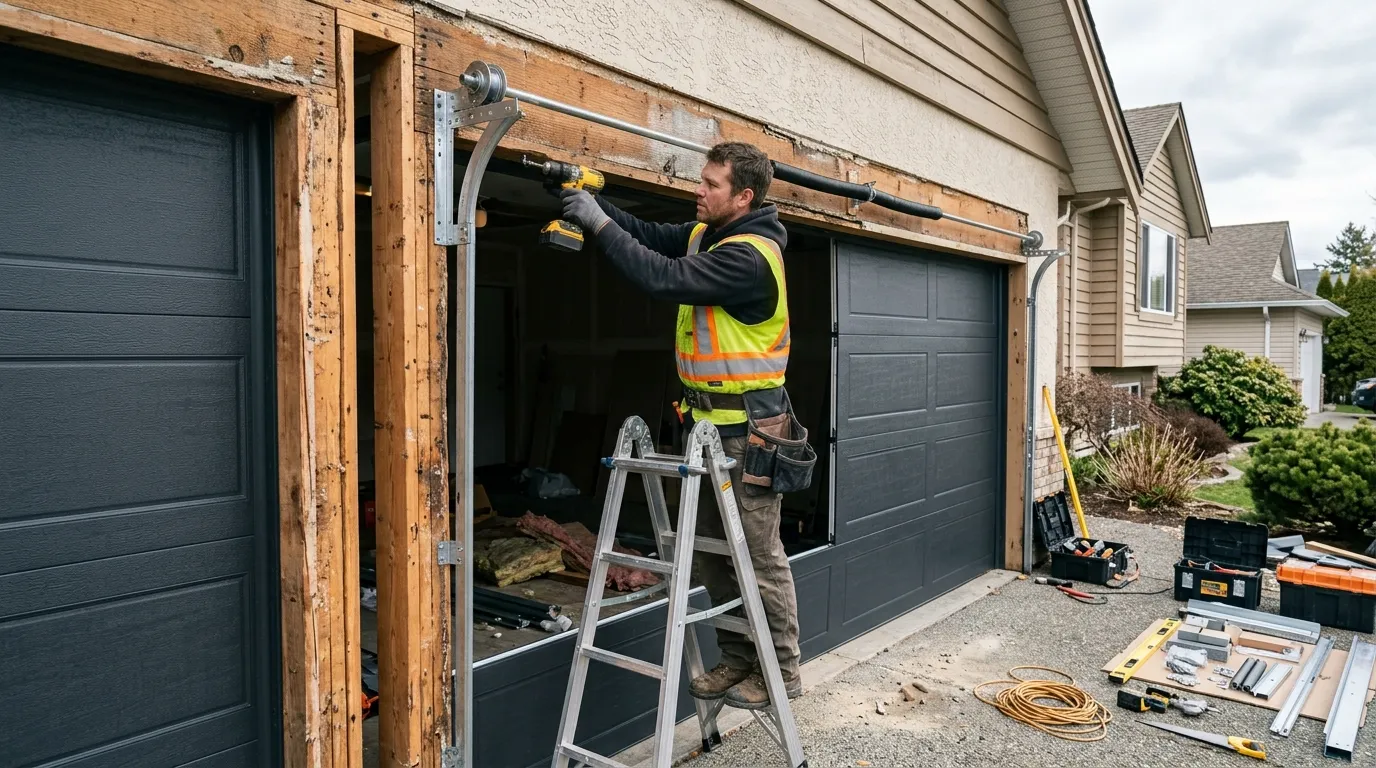
Garage Door Installation
New sectional doors sized and installed for the housing stock actually built in this area.
Learn more →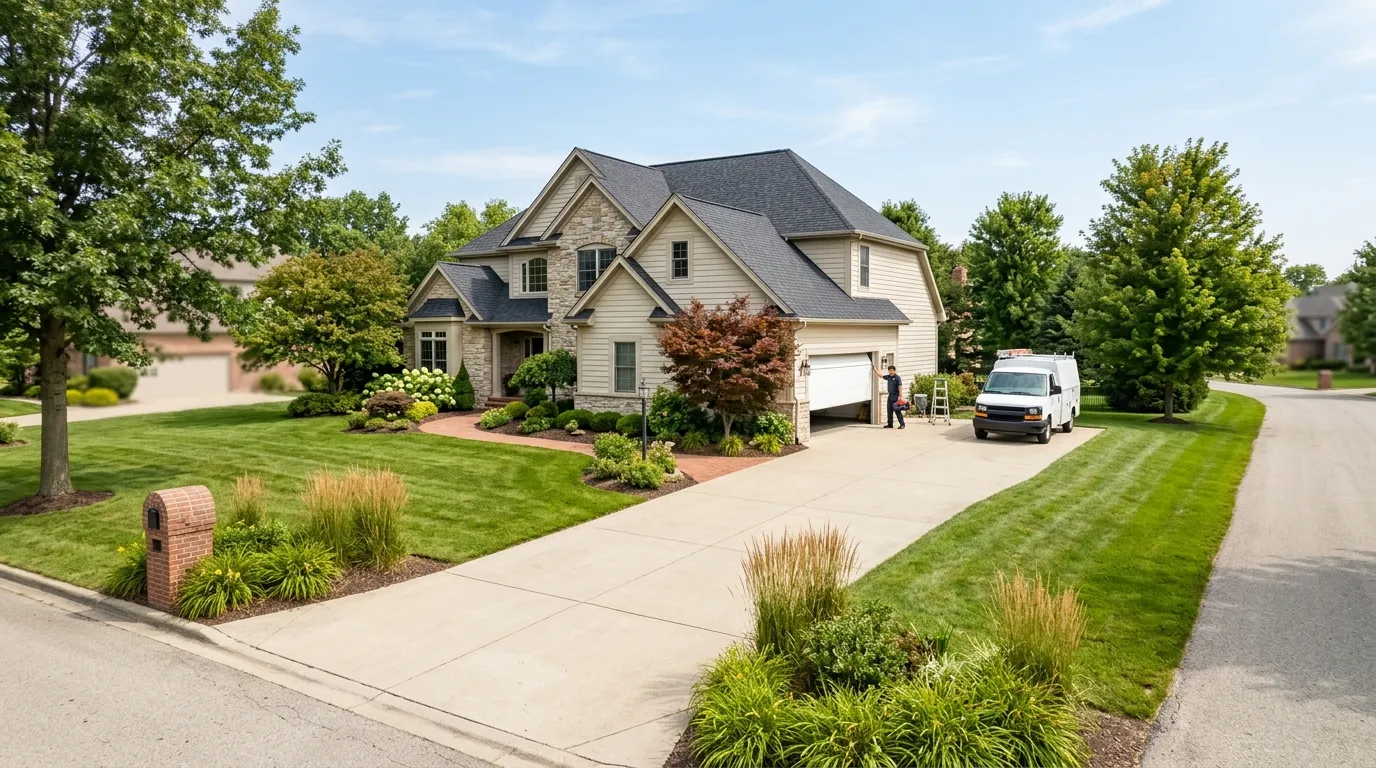
Garage Door Service
Tune-ups, lubrication, and safety checks that catch a small problem before it becomes a service call.
Learn more →Frequently Asked Questions
How do I know if my garage door is original to the house?
If your home was built in the range common to this area - roughly 1955 to 2008, with most stock from the 1980s and 90s - check the door's date sticker, usually on the inside edge of a side panel, or ask if it's ever been replaced. An unstamped steel door with old-style steel rollers and no safety sensors on the track is usually original.
Is it worth replacing an opener from the 1990s even if it still works?
If it still reverses reliably when something's under the door and closes fully every time, it can keep running. If you're holding the button to force it closed or it doesn't reverse on contact, that's a safety issue tied to older opener logic, not a minor annoyance, and it's worth replacing rather than working around.
Do older doors handle Annapolis winters worse than newer ones?
They handle the same cold-moderate seasonal swings, just with more cycles behind them. A door from the 1980s has been through three or four decades of contraction and expansion on the same springs and seals, so failures tend to cluster around the first hard cold snap or the return of summer humidity, rather than happening randomly.
Can you always get parts for an older door?
Not always. Doors that predate the common 1955-2008 build range, or use hardware specs that stopped being standard decades ago, sometimes need a special-order part instead of something we carry on the truck. When that's the case, we'll tell you upfront rather than guess at a timeline.
Have a Door That Needs a Second Opinion?
Call and describe what it is doing - we will tell you what it likely is.