
Annapolis Garage Door Guide
Weather Seals and Draughts in Annapolis Garage Doors
Why homes built between 1955 and 2008 near Annapolis lose warm air through garage door seals, how to check yours, and when the gap actually matters.
- Licensed & Insured
- Same-Area Service Calls
- Upfront Pricing
The Problem
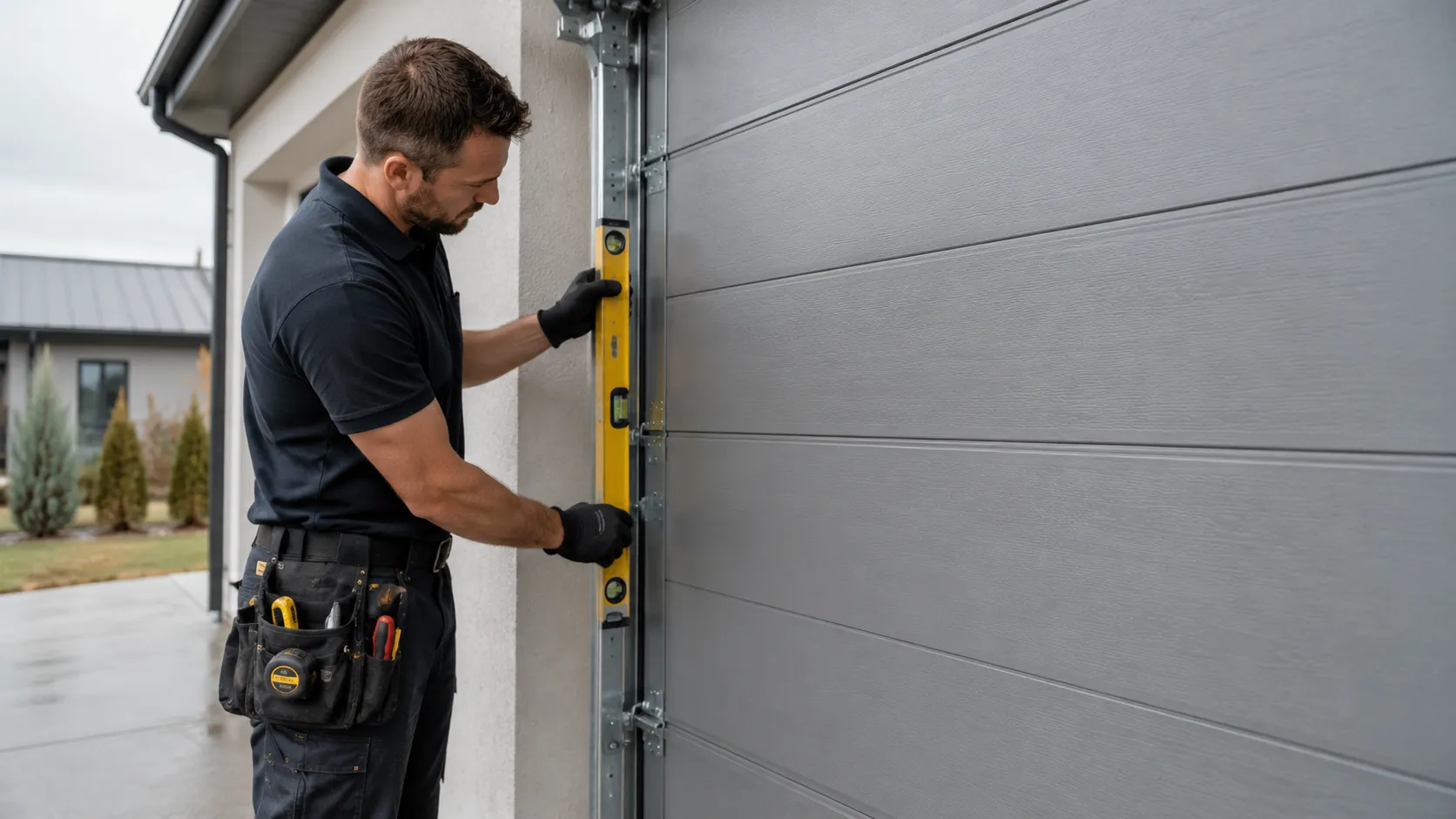
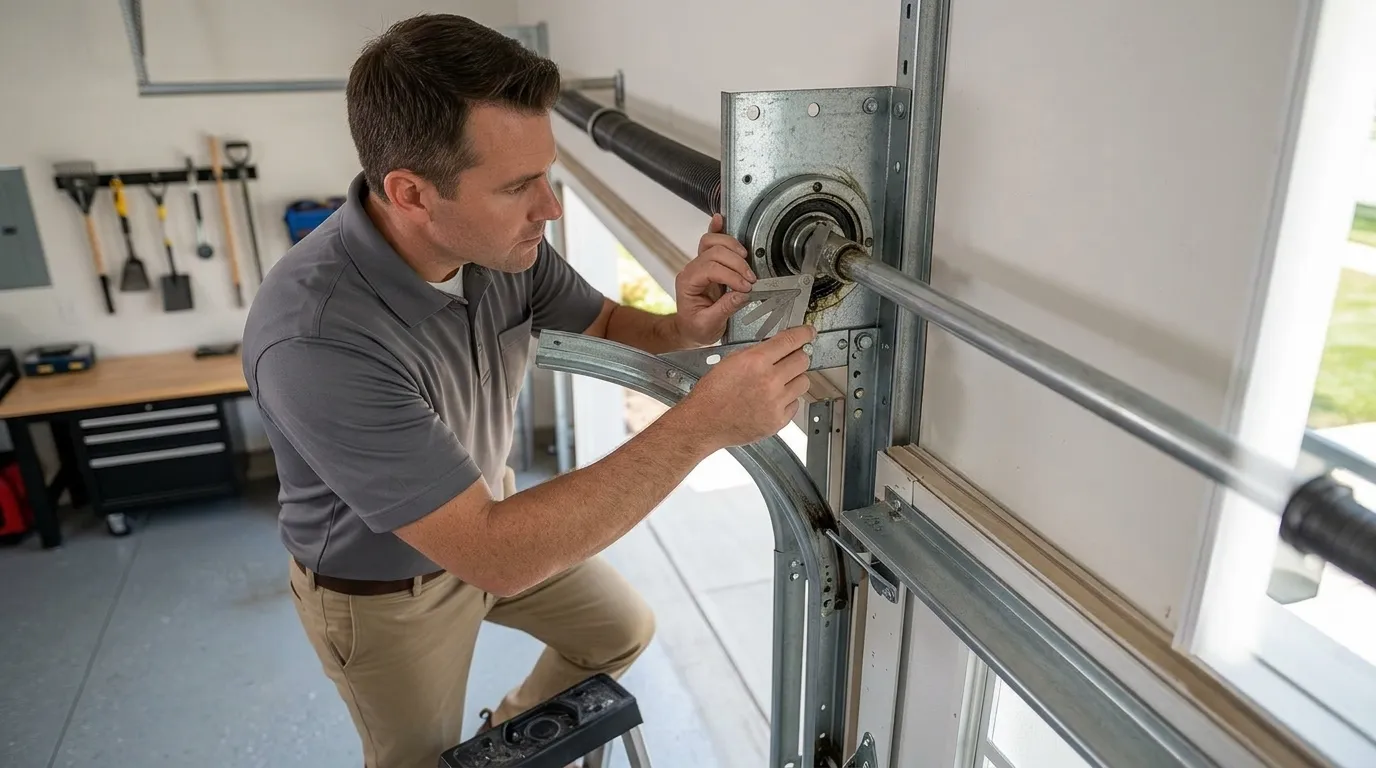
Most garage doors in this area went up somewhere between 1955 and 2008, with the bulk of the stock dating to the 1980s and 90s. That matters because the bottom seal and side weatherstripping on a door that age were built to a lower bar than what's sold today, and rubber that's been compressing under a door for twenty or thirty years stops doing its job long before the door itself gives out. You feel it as a cold line of air along the floor of the garage, or you see daylight at the corners when the door is down.
On a lot of these 1980s-era doors the seal channel is a thin aluminum retainer that was never meant to hold anything but the original strip, so when that strip cracks or shrinks, air gets in around it as well as under it. This isn't a door failure. It's a door doing exactly what a thirty-year-old rubber gasket does.
The draught itself won't strand your car inside, but it does mean the garage is working against your heating system every cold morning, and if the garage shares a wall with living space, you're paying for that gap whether you notice it or not.
Checking It Yourself
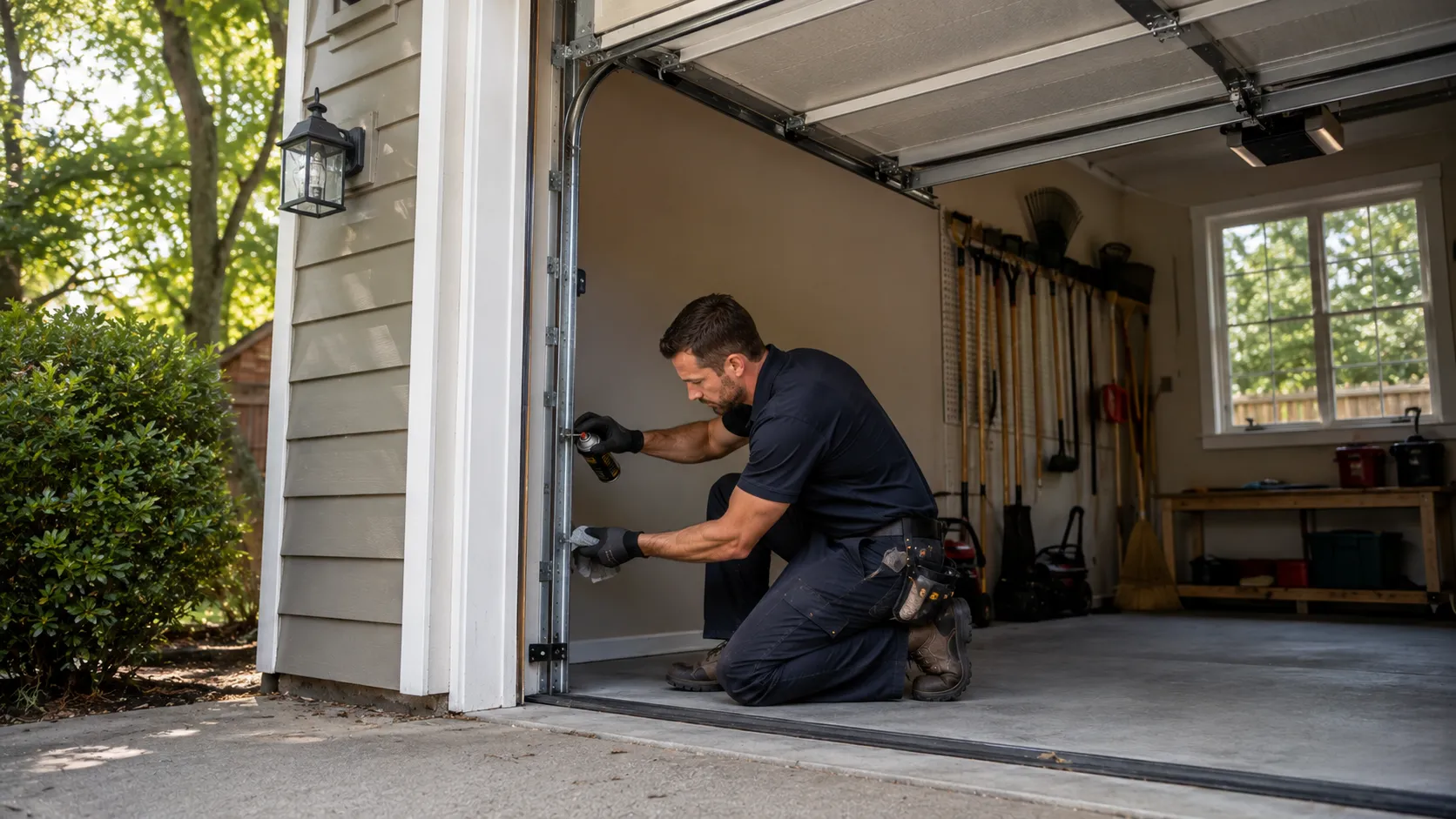
Close the door at night and walk the inside perimeter with a flashlight off. Any line of light along the bottom or sides is a seal that's no longer sealing. Run your hand along the bottom edge - if the rubber is flat, cracked, or pulled away from the aluminum retainer, that's your gap.
On doors from the 1980s and 90s especially, check the corners first; that's where the seal shrinks fastest because it flexes every time the door cycles. Side seals (the foam or rubber strip along the vertical tracks) are worth checking too, but they're less common on older installs, since a lot of doors from that era shipped with just the bottom astragal and nothing on the sides. If your door is a panel-and-track design from that period, also look at where panels meet - warped or bowed panels won't seat against any seal no matter how new it is, and that's a different repair.
A five-minute check tells you which problem you actually have before you spend money on the wrong fix.
Doing Nothing For Now
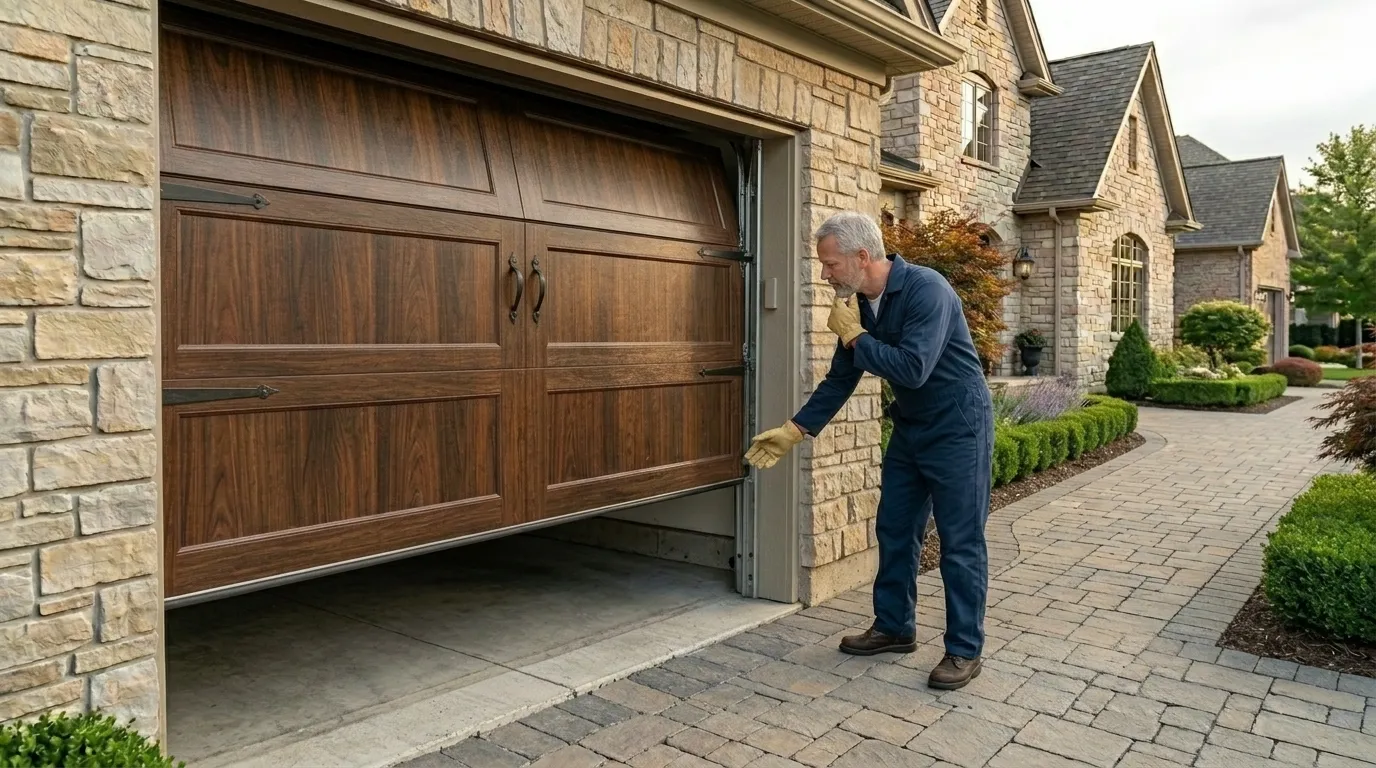
If the gap is small and even, you can leave it through a mild stretch and it won't hurt the door. A worn bottom seal doesn't strain the springs or the opener, and it's not a safety issue the way a frayed cable or a cracked panel is. What it costs you is heat, plain and simple - the garage stays a few degrees colder, and if it's attached to the house, that cold edges into the rooms next to it.
Given the climate here runs cold and moderate rather than mild, that loss adds up over a full winter more than it would somewhere with shorter cold stretches. I won't tell you a worn seal is an emergency, because it isn't. But I also won't pretend it fixes itself.
Rubber that's already cracked keeps cracking, and putting it off from November to February just means a colder February. If you're not ready to replace it now, at least know that waiting doesn't make the repair cheaper or harder - it's a low-cost part either way. The bill only grows if you let the delay mask something else, like a warped panel that's actually the real reason it doesn't seal.
How Local Conditions Play In
A cold, moderate climate doesn't hit a garage door the way a hard freeze-thaw region does, but it still does steady damage to old seals through repeated contraction as temperatures swing through the season. Rubber that's been through thirty winters here is stiffer than rubber that's been through five, and stiff rubber can't flex back into full contact with the floor the way it did new. That's the core issue with the bulk of the local housing stock dating to the 1980s and 90s - the doors are old enough that the seals have gone through this cycle hundreds of times.
None of this means your door needs replacing. Most of the time it means the twelve-dollar strip of bottom seal needs swapping, not the door. But if the door itself has bowed or the track has pulled away from the jamb - more common on the earlier end of that 1955-2008 build range - a new seal won't hold a straight line against a door that isn't straight anymore, and that's worth knowing before you buy the wrong part.
How We Can Help
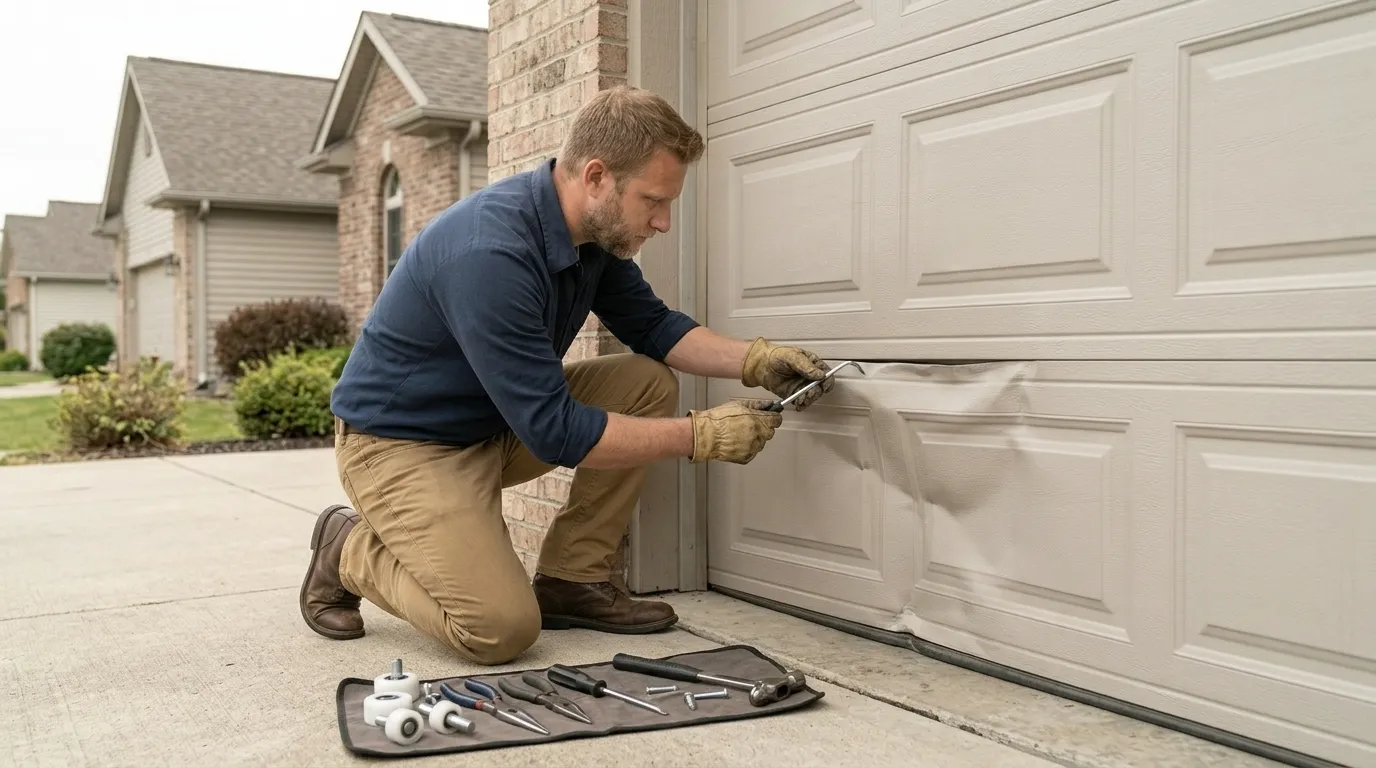
Garage Door Repair
Springs, cables, tracks, rollers, and openers fixed by a tech who explains the problem before touching anything.
Learn more →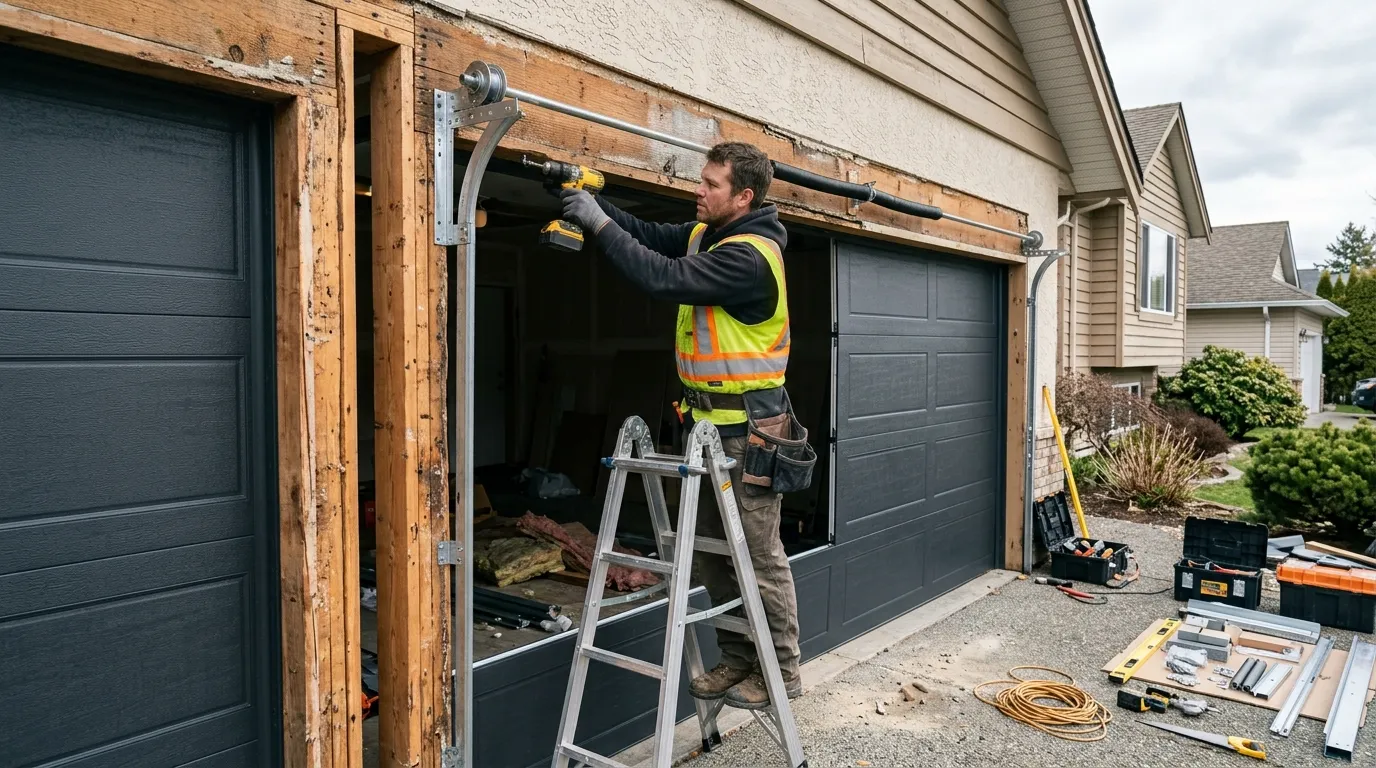
Garage Door Installation
New sectional doors sized and installed for the housing stock actually built in this area.
Learn more →
Garage Door Service
Tune-ups, lubrication, and safety checks that catch a small problem before it becomes a service call.
Learn more →Frequently Asked Questions
How often should I replace the bottom seal on an older garage door?
There's no fixed schedule, but if your door dates to the 1980s or 90s original stock common in this area, check it yearly. Cracked, flattened, or shrunk rubber that no longer meets the floor evenly is the sign to replace it - usually a low-cost part, not a structural repair.
Will a worn seal freeze my garage pipes?
That depends on your garage's insulation and what's in it, which isn't something I can speak to generally. A worn seal does let more cold air in during our cold, moderate winters, so if you have exposed plumbing in the garage, it's worth treating the draught seriously rather than waiting.
Is a drafty garage door worth fixing if the door still works fine?
Yes, usually. The seal and the door's mechanical function are separate things. A door can open and close perfectly while still losing heat through a worn bottom seal or side weatherstripping - especially common on doors from the 1980s and 90s stock typical of this area.
Have a Door That Needs a Second Opinion?
Call and describe what it is doing - we will tell you what it likely is.