
Annapolis Garage Door Guide
What That Noise From Your Garage Door Is Actually Telling You
Annapolis homes built between 1955 and 2008 carry different hardware eras. Here's how to read the sounds your door makes before a spring or cable lets go.
- Licensed & Insured
- Same-Area Service Calls
- Upfront Pricing
The Problem
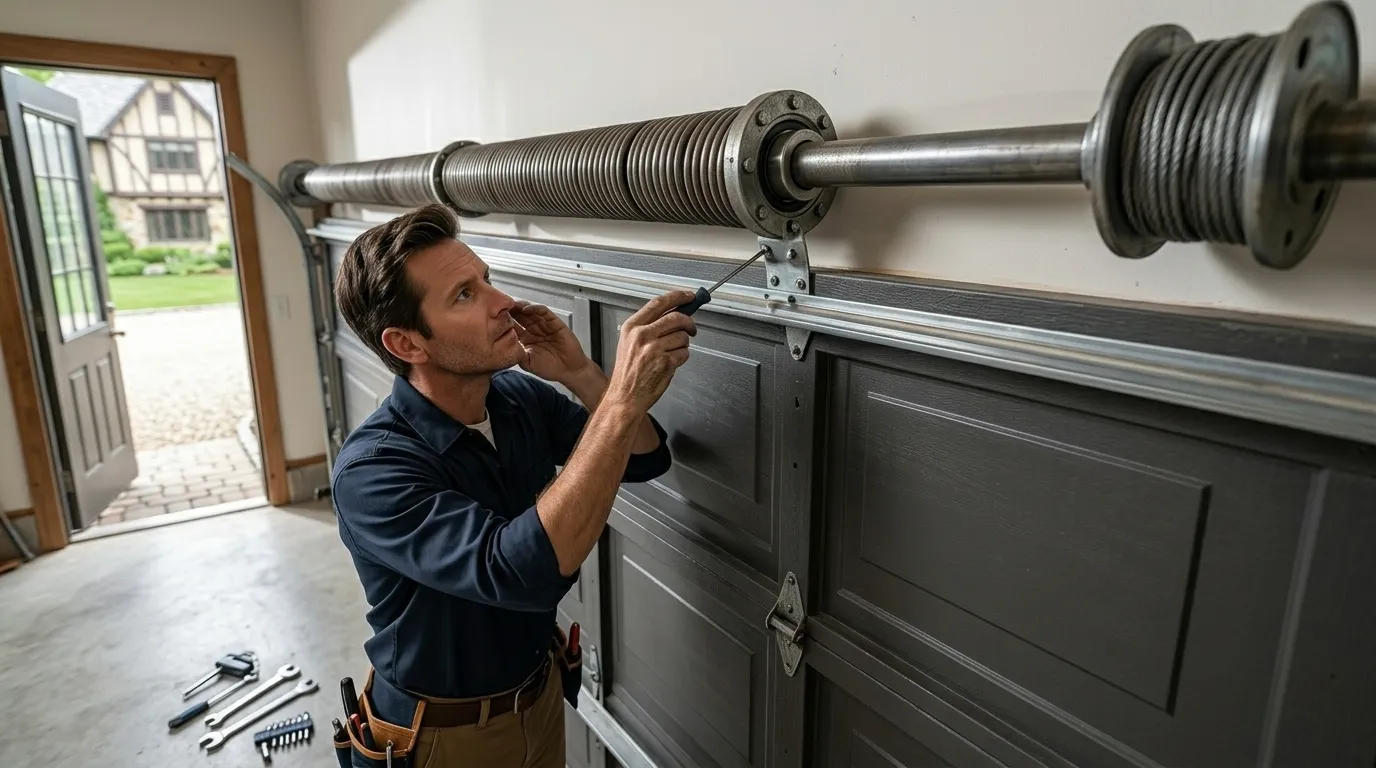
Most houses around Annapolis went up between 1955 and 2008, with the bulk of the stock dating to the 1980s and 90s across the 47 areas we work in. That range matters because it spans three or four distinct eras of garage door hardware - extension springs on older side-mount tracks, early torsion setups on 80s builds, and the sealed-bearing torsion systems that came standard by the 2000s. A grinding noise on a 1986 door and the same grinding noise on a 2005 door usually point to different parts wearing out, because the hardware inside is not the same hardware.
A homeowner who searches "garage door making noise" and reads generic advice built for a newer or older housing market ends up chasing the wrong fix. Squeals, thuds, and grinding are not interchangeable complaints - each one tracks to a specific part, and which part depends heavily on when your door and opener were actually installed, not just how old the house looks from the street. If your neighborhood was part of the 1980s-90s wave that makes up most of this area's housing, the odds favor a torsion spring or a worn roller over the cable-and-pulley failures more common on the handful of pre-1970 doors still running around here.
Checking It Yourself
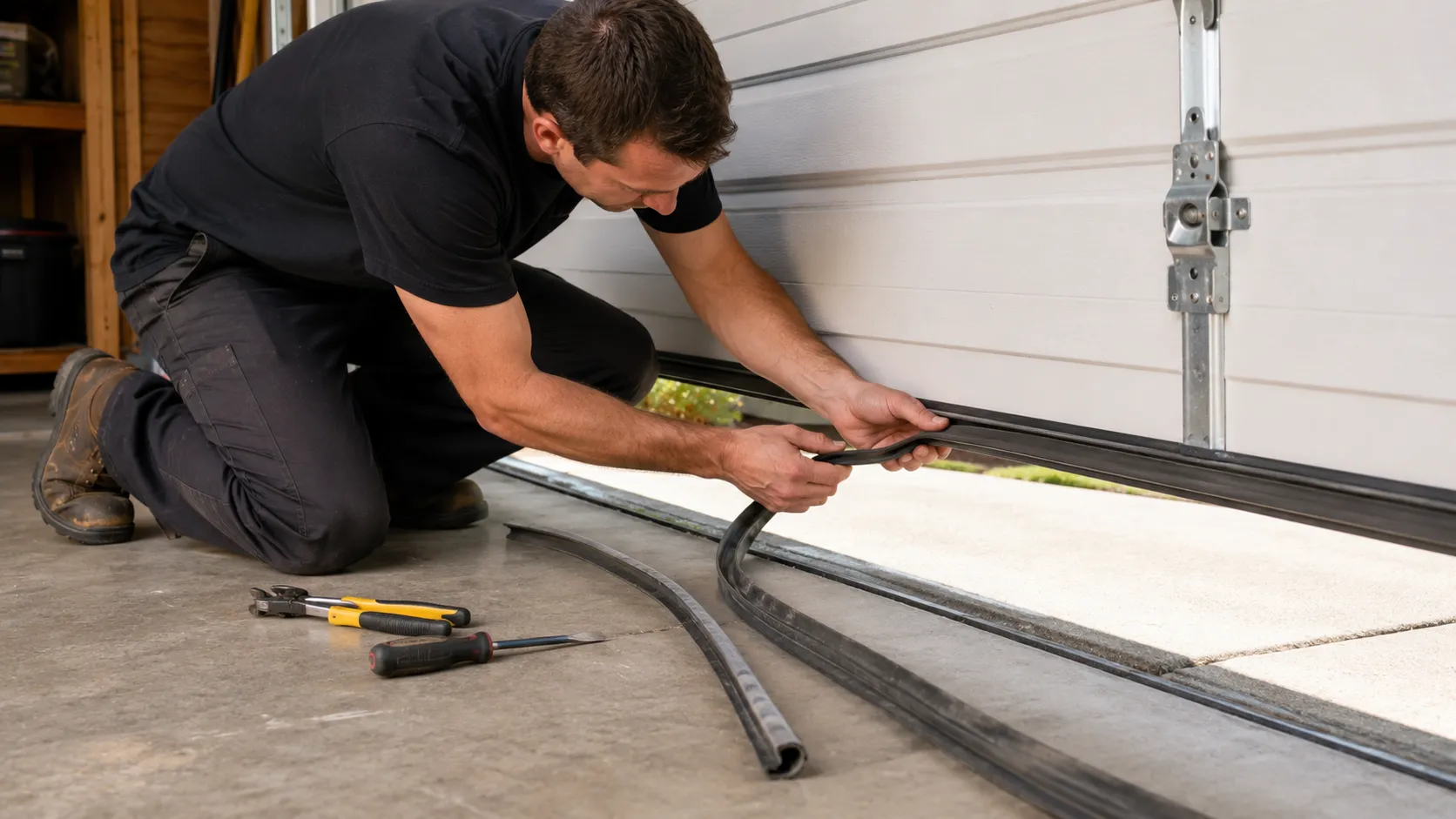
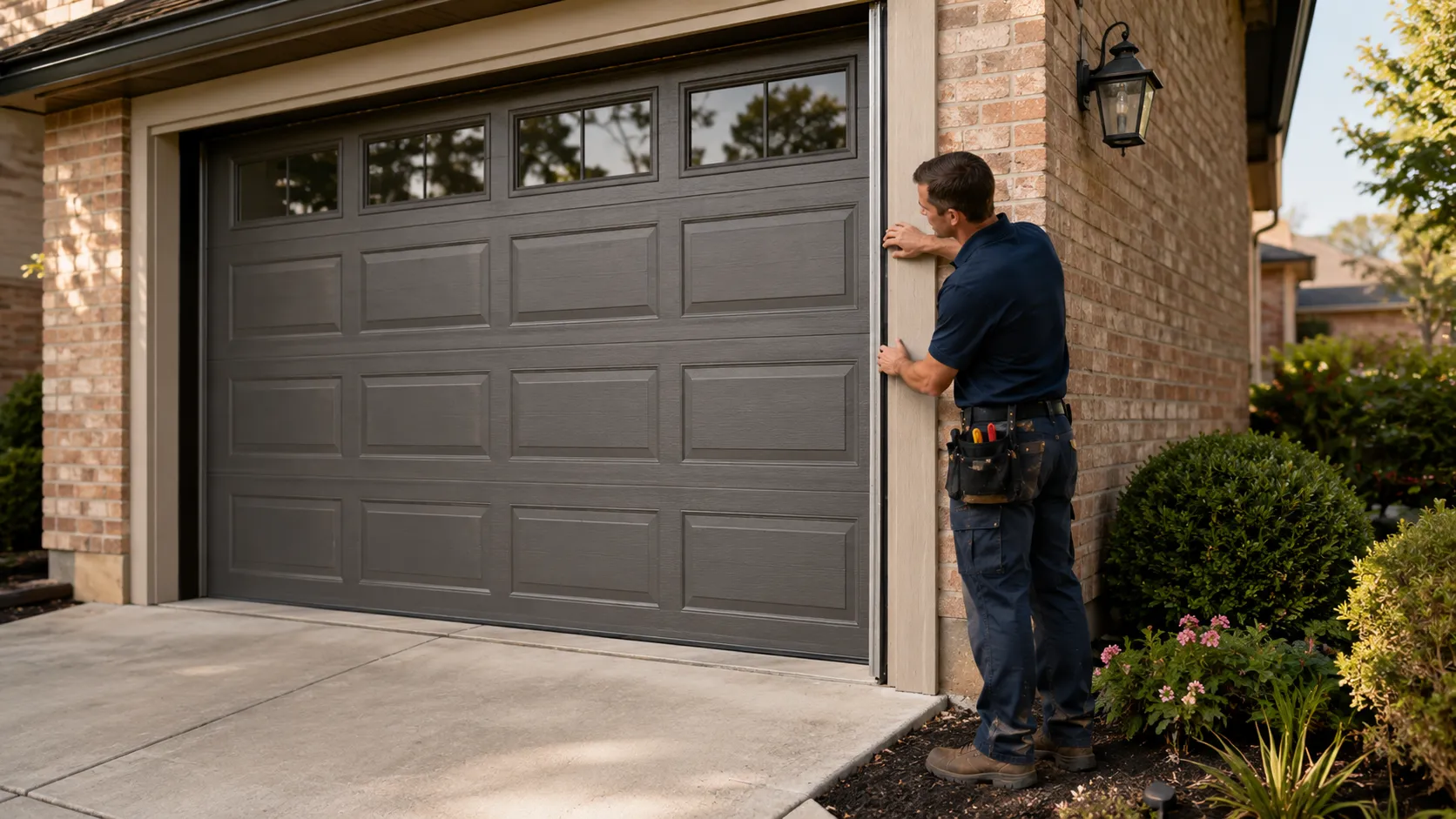
Stand in the garage and open the door by hand with the opener disconnected. A rhythmic thump once per rotation usually means a flat spot on a roller or a bent track section - common on doors from the 1980s-90s stock where steel rollers were standard before nylon became typical. A sharp bang, especially if it happens right as the door starts moving, is worth taking seriously: that is often a spring under tension failing, and springs don't give much warning before they let go completely.
Listen for a difference between a squeal (usually a dry hinge or roller, cheap to fix) and a grinding metal-on-metal sound (usually a bearing or a spring coil, not cheap to ignore). Run the door up and down twice, slowly, with the lights off and your hand near - not on - the track, so you can feel where a vibration starts. On older extension-spring setups, check that the safety cables are actually threaded through the springs; a lot of pre-1993 installs never had them retrofitted, and that's a real gap, not a maintenance item.
We can't diagnose a specific sound over the phone with any confidence - that part genuinely needs a hand on the door.
Doing Nothing For Now
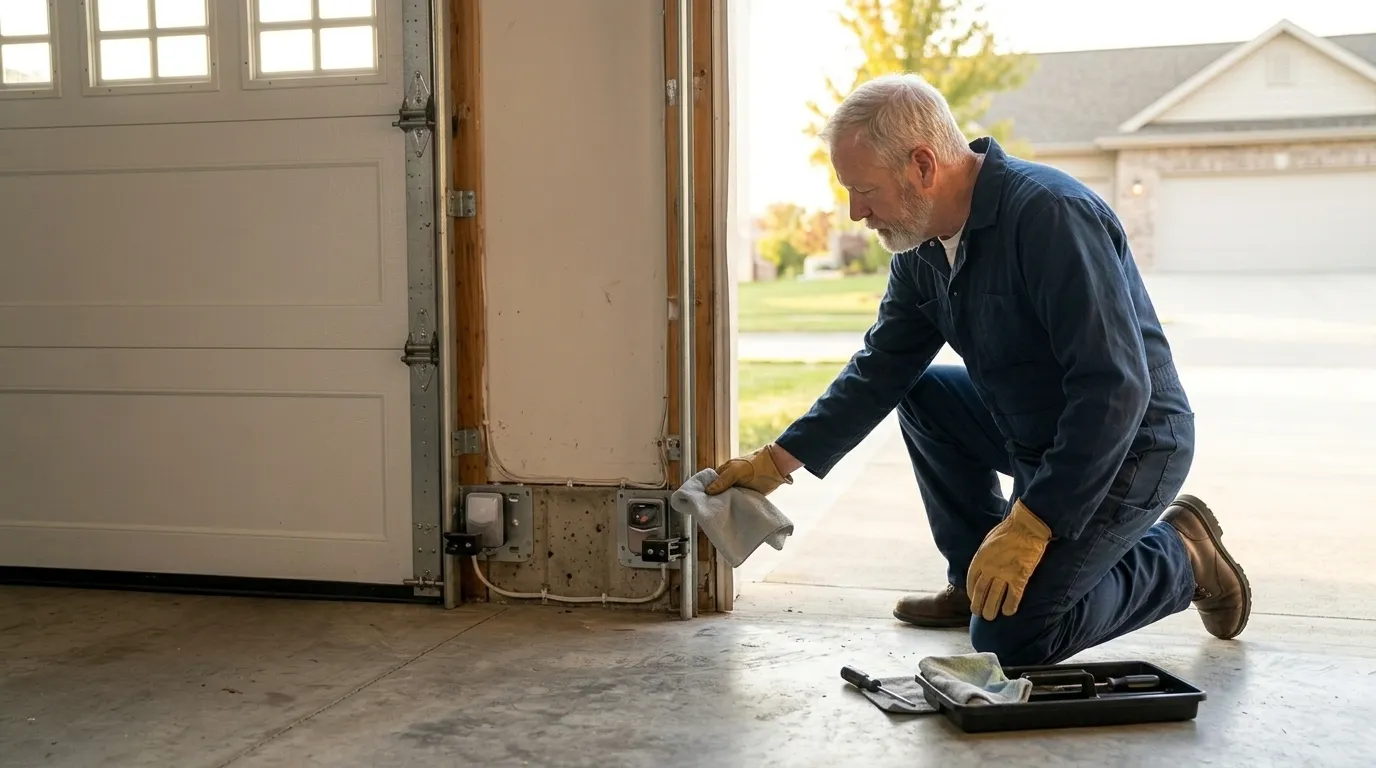
A squeaky hinge can wait. A door that groans faintly at the top of its travel and nowhere else can usually wait too, at least long enough to get someone out. What can't wait is anything involving the spring itself - a spring that's already made noise once under load is a spring that's already lost some of its temper, and it will finish failing on its own schedule, not yours.
Given that median household income across this service area sits around $123,176 and most owners here hold the house rather than rent, a delayed spring replacement is usually a matter of scheduling, not affording - which means there's rarely a good reason to keep opening a door with a spring that's talking to you. The honest limitation: we don't stock every part for every era of door on the truck, and a 1960s-vintage extension spring setup on an original one-piece door sometimes means a special order and a few days' wait rather than a same-day fix. If your door is in that older minority rather than the common 1980s-90s stock, tell us that up front so we can plan the visit around it instead of showing up short a part.
How Local Conditions Play In
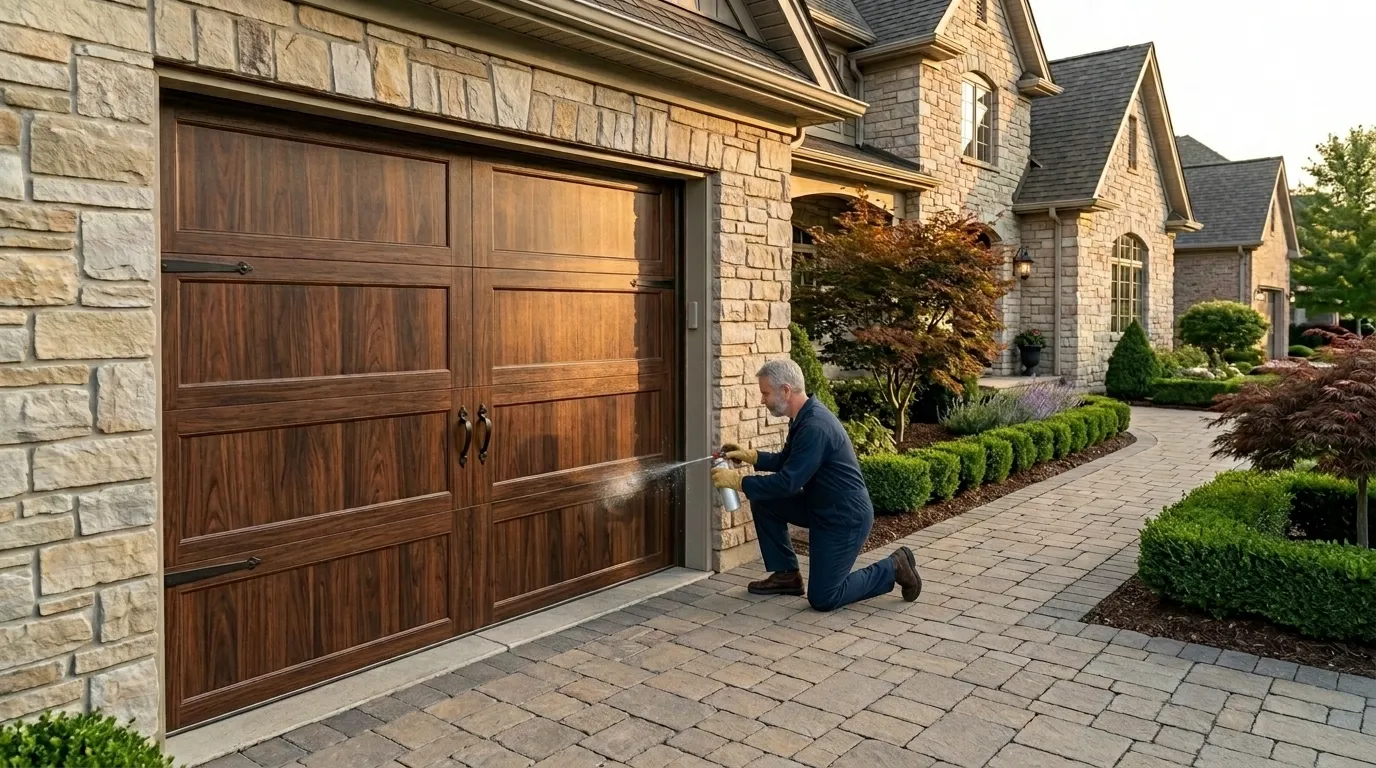
This area sits in a cold-moderate climate band, which means steel hardware goes through a real freeze-thaw cycle most winters, not the light seasonal swing you'd get somewhere milder. Torsion springs lose a little tension as steel contracts in cold weather, and a door that ran quiet in September can start groaning in January for no reason other than temperature - that's normal, but it's also exactly when a spring already near the end of its life tends to finally give out. Lubricant that was fine in summer humidity can gum up or thin out with the swings we get here, which changes the pitch of a squeak without changing what's actually wrong.
If you're in one of the areas within a few miles of the water - Edgewater, Mayo, Riva - the added moisture in the air speeds up rust on tracks and hinges compared to the drier inland spots further out toward Crofton or Gambrills, so a noise that's purely cosmetic corrosion near the bay can look and sound worse than the same wear inland. None of that changes what the noise itself means, but it does change how fast a small problem turns into a call you can't put off.
How We Can Help
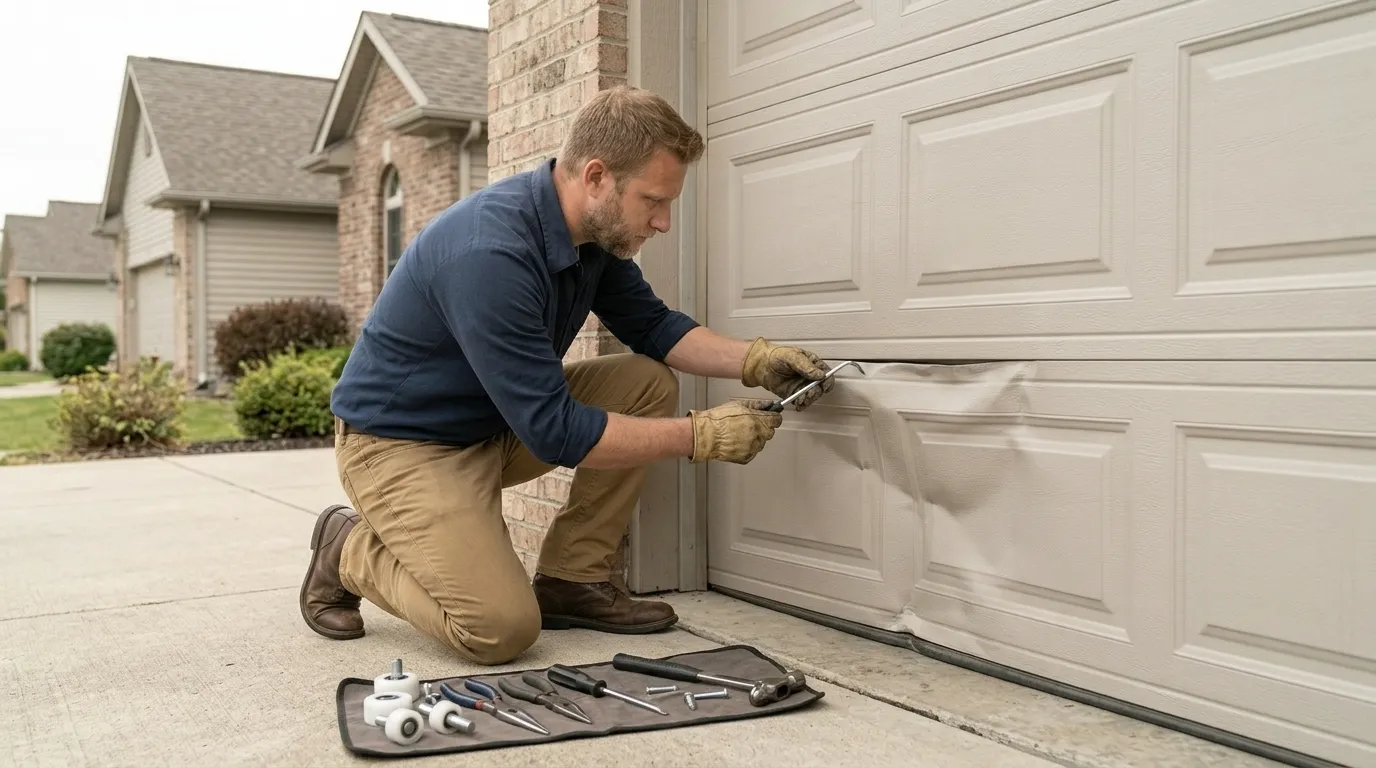
Garage Door Repair
Springs, cables, tracks, rollers, and openers fixed by a tech who explains the problem before touching anything.
Learn more →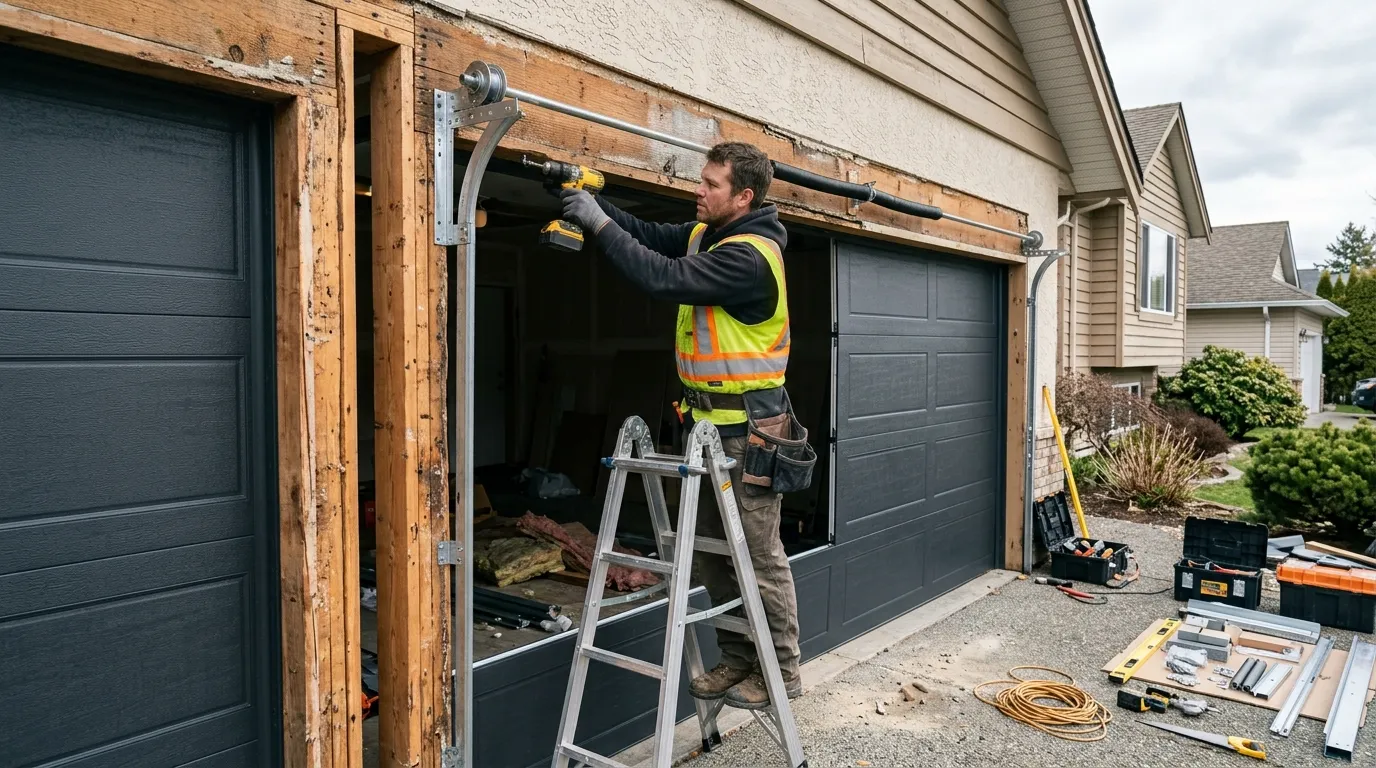
Garage Door Installation
New sectional doors sized and installed for the housing stock actually built in this area.
Learn more →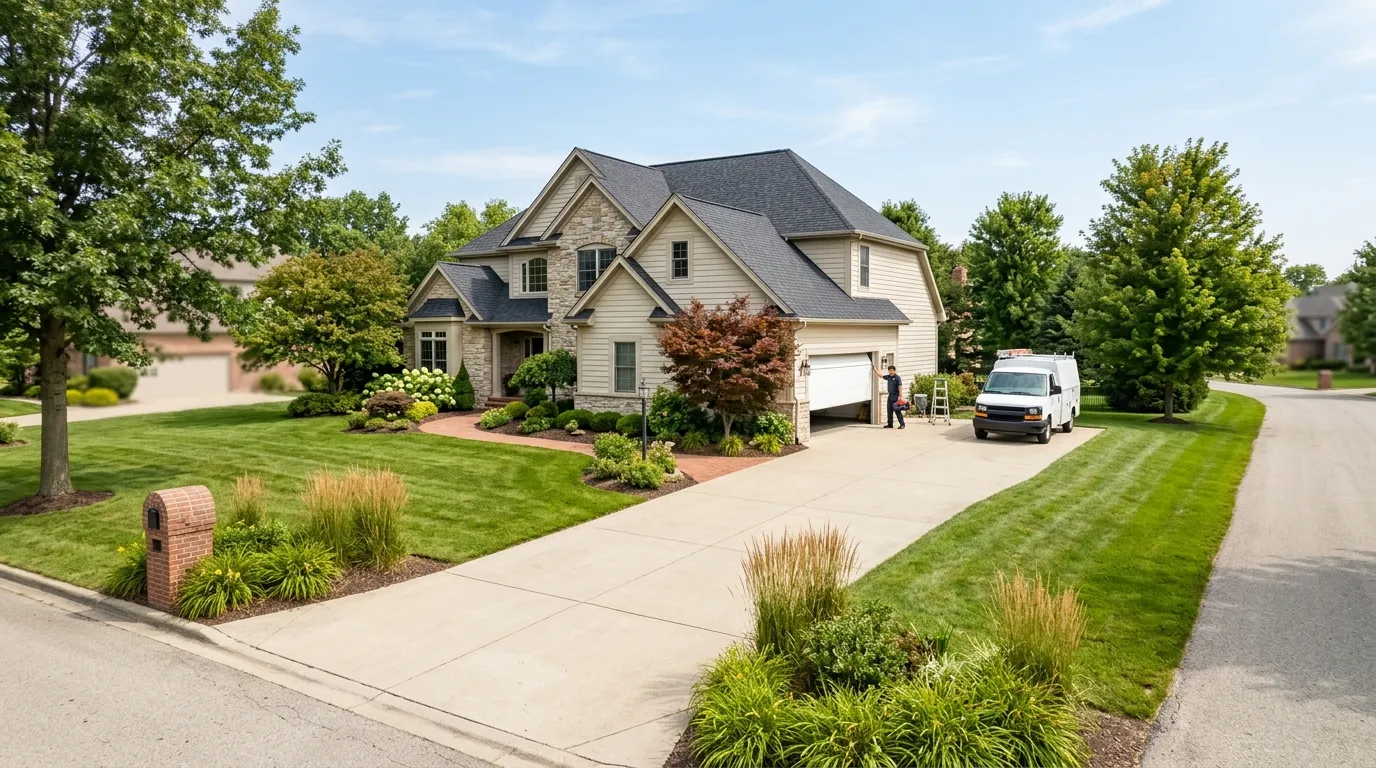
Garage Door Service
Tune-ups, lubrication, and safety checks that catch a small problem before it becomes a service call.
Learn more →Frequently Asked Questions
My garage door squeaks but still opens fine - do I need to call someone?
Not urgently. A squeak alone, especially from hinges or rollers, is usually a lubrication issue rather than a failing part. Keep an eye on whether it turns into a grinding or banging sound, which points to something under load wearing down instead of just needing oil.
Why does my door sound worse in winter?
Steel contracts in cold weather, and in this cold-moderate climate band that means torsion springs lose a bit of tension seasonally. A door that's quiet most of the year can start groaning in winter even with no new damage - though it's also when a spring already near failure tends to finally break.
Is a loud bang always the spring?
Not always, but a sharp bang right as the door starts moving is the most common sign of a spring failing under tension. Given how many doors in this area date to the 1980s-90s, that's often original or first-replacement hardware reaching the end of its life.
Have a Door That Needs a Second Opinion?
Call and describe what it is doing - we will tell you what it likely is.