
Annapolis Garage Door Guide
Detached and Attached Garages Age Differently in Annapolis
Annapolis homes built between 1955 and 2008 mix detached and attached garages, each aging differently in our cold, moderate winters. Here's what to watch for.
- Licensed & Insured
- Same-Area Service Calls
- Upfront Pricing

The Problem
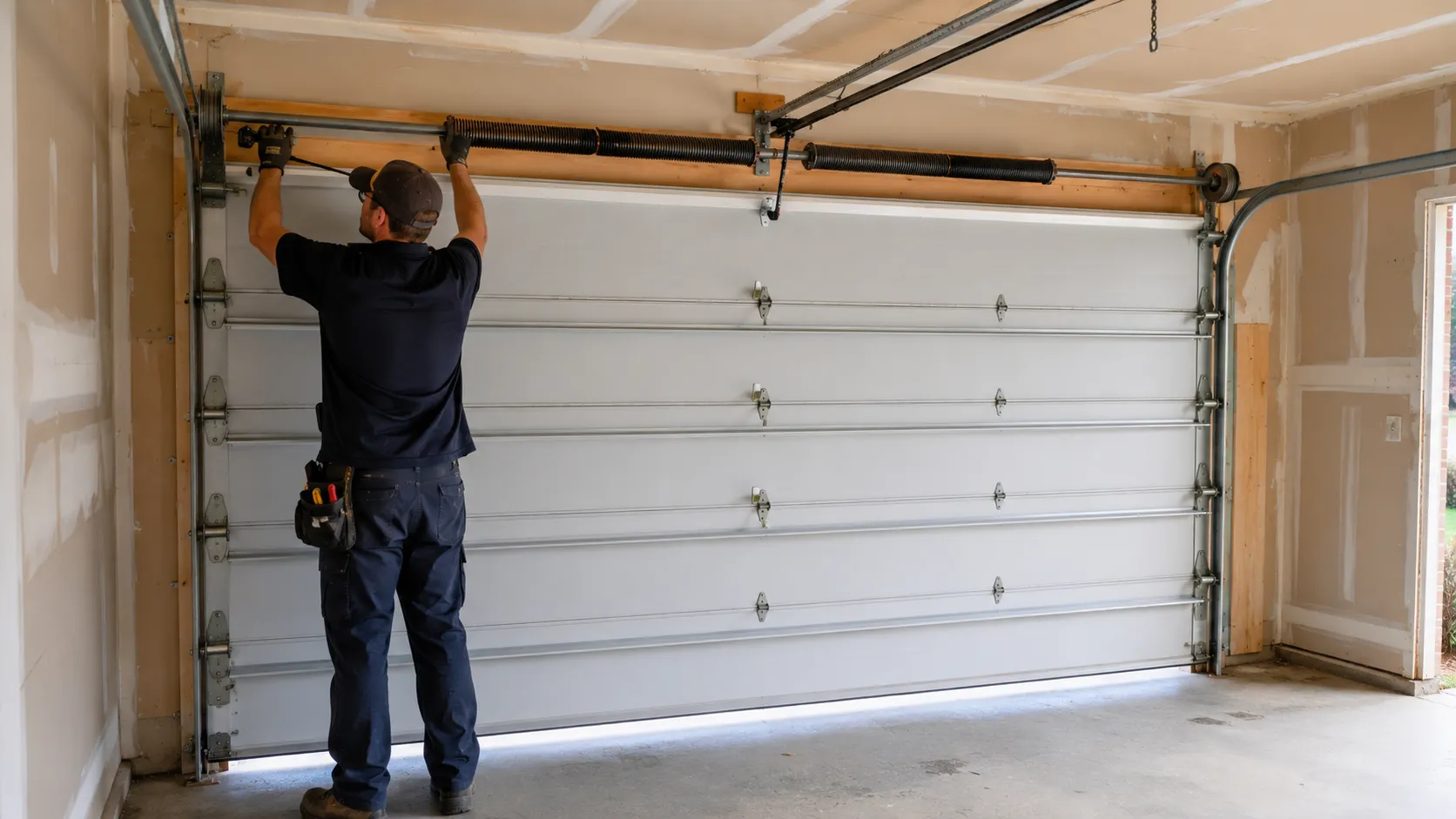
Most of the houses we work on in Annapolis went up between 1955 and 2008, with the typical build year sitting around 1985. That range covers two very different ways a garage got built onto a lot. Older stock, especially anything from the earlier end of that window, is more likely to have a detached garage set apart from the house, framed light, with its own header and its own exposure to the weather on all four sides.
Stock from the 1980s and 90s - which is the bulk of what's out there across the areas we cover - leans attached, sharing a wall and a roofline with the house, which changes how the door, track, and opener behave over time. An attached door rides on framing that's tied into a heated structure. A detached door doesn't get any of that benefit.
Same spring, same track hardware in a lot of cases, but one is fighting outdoor temperature swings on both faces of the jamb and the other only fights it on one. We get called to both kinds, and the failure patterns aren't identical - which is the point of this page.
Checking It Yourself
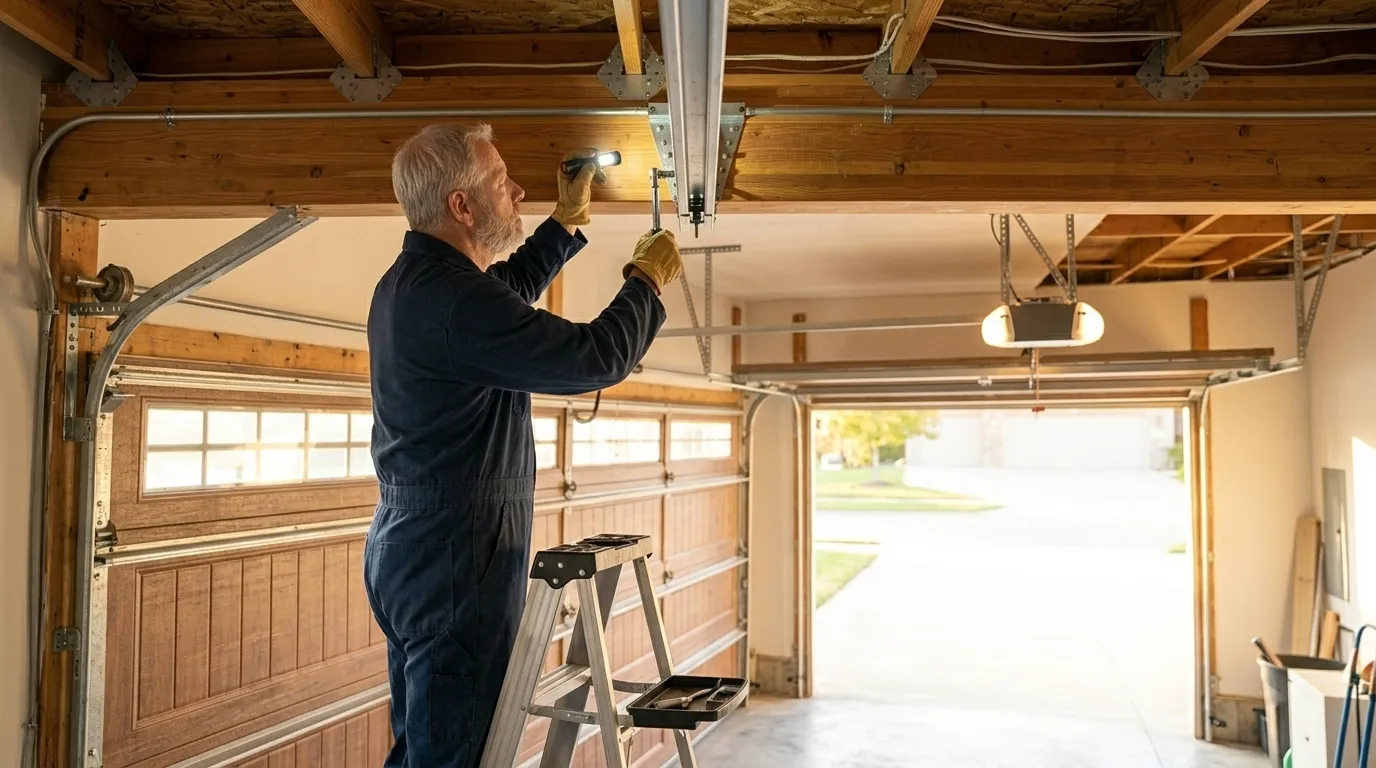
Walk out to the garage and look at where the track bolts into the framing. On an attached garage, that framing usually ties into the house's stud wall, so if you see movement or gapping at the top bracket, it's often the house settling, not the garage sagging on its own. On a detached structure, check the header above the door itself - on houses from the older end of our 1955-2008 range, that header is more likely original and more likely to have shrunk or bowed independent of anything else on the property.
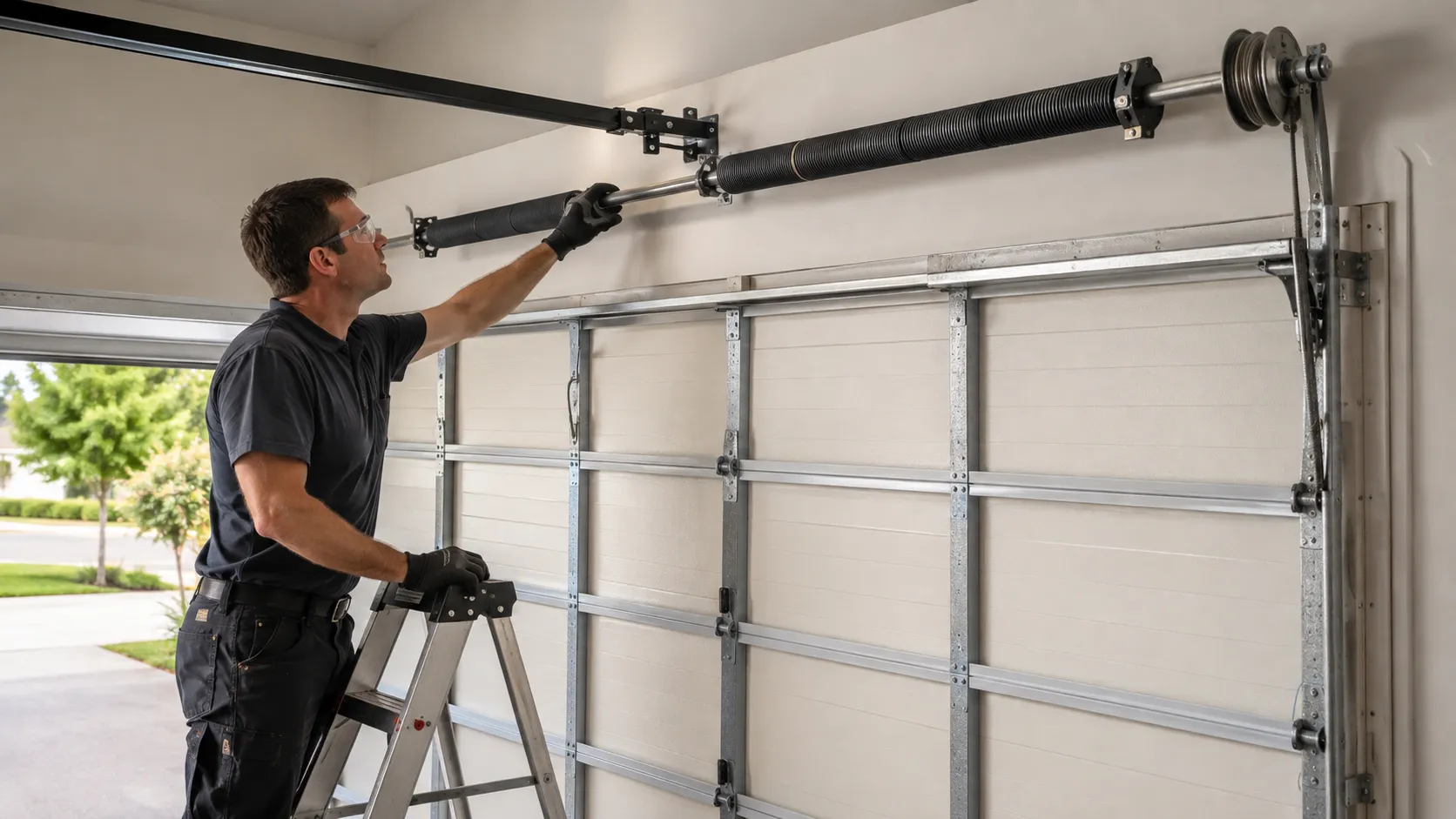
Open and close the door by hand with the opener disconnected. If it's heavier or lighter to lift than it should be, that's a spring telling you something, not a track problem. Look at the bottom seal too - on a detached garage with no heated space next door, that seal takes more direct freeze-thaw cycling than one on an attached garage, so it tends to crack and let daylight through sooner.
None of this needs tools beyond your own two hands and a flashlight. If the door binds, jumps, or reverses on its own, stop opening it by remote and call someone before you find out why the hard way.

Doing Nothing For Now
Not every issue on an older door is urgent. If the door still opens, closes, and seals reasonably well, and the only problem is cosmetic - faded paint, a dented panel that doesn't affect travel - it's fair to leave it for now, especially on a detached garage where a bent panel isn't heating or cooling anything you're paying for. Where we'd push you to act sooner is a spring that's visibly stretched or a cable that's frayed, because those don't get better with time regardless of whether the garage is attached or detached.
The honest limitation here: we can't tell you from a description alone whether your specific door falls into the wait-and-see category or the call-us-this-week category. Torsion spring cycle counts and panel gauge vary enough across the 1955-2008 building range that a five-minute look in person beats any general rule we could put on a page. If you're unsure, that's a reasonable thing to ask about without committing to a repair.
How Local Conditions Play In
Annapolis sits in a cold-moderate climate band, and that matters more for a detached garage than an attached one. A detached structure has no shared wall pulling heat from the house, so its slab, its jamb, and its bottom seal go through the full freeze-thaw swing on their own each winter.
An attached garage, even an unheated one, usually runs a few degrees warmer just from sitting against conditioned living space, which slows down the same wear. Across the roughly 192,222 households and 96,266 owner-occupied houses in the area we work, a good share still carry the original detached garage from that 1955-2008 building wave, and those are the doors we see with more track corrosion and stiffer springs come January.
How We Can Help
Garage Door Repair
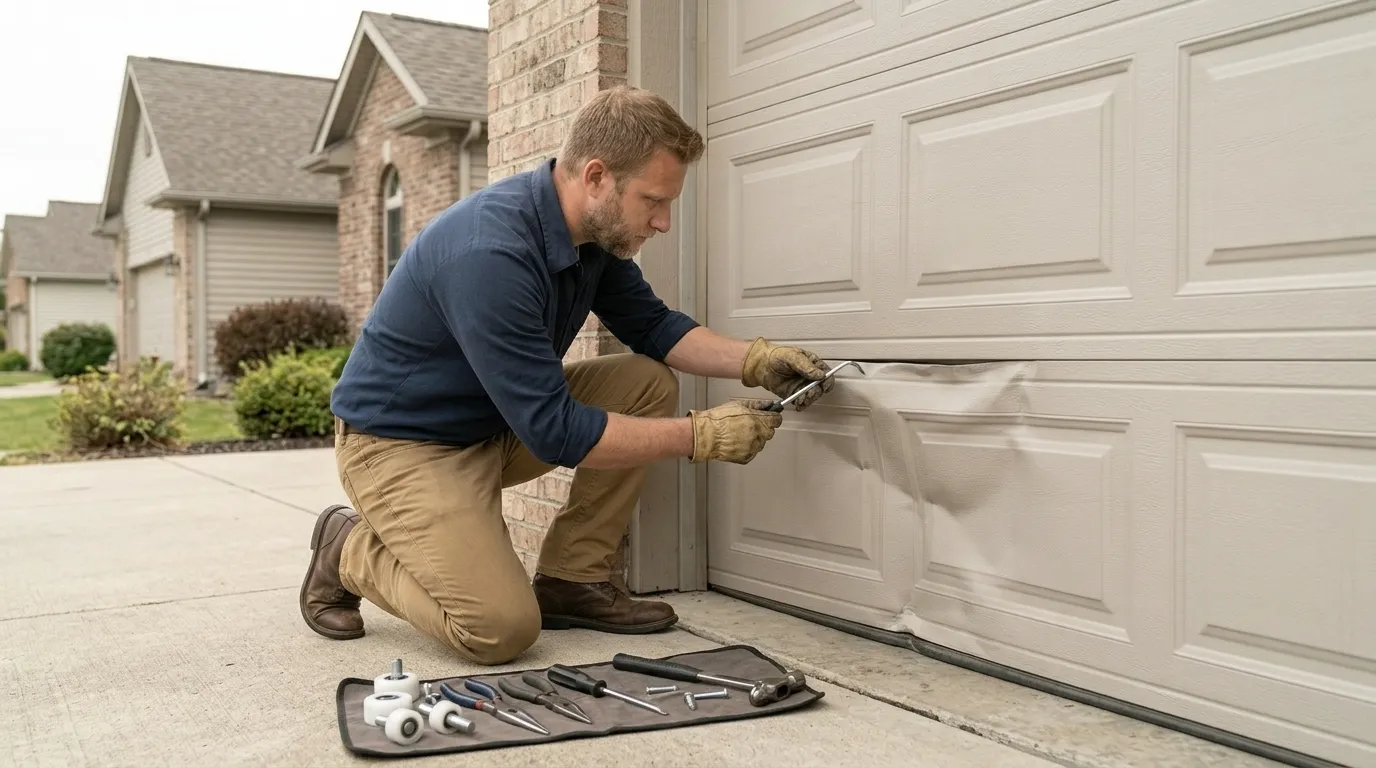
Springs, cables, tracks, rollers, and openers fixed by a tech who explains the problem before touching anything.
Learn more →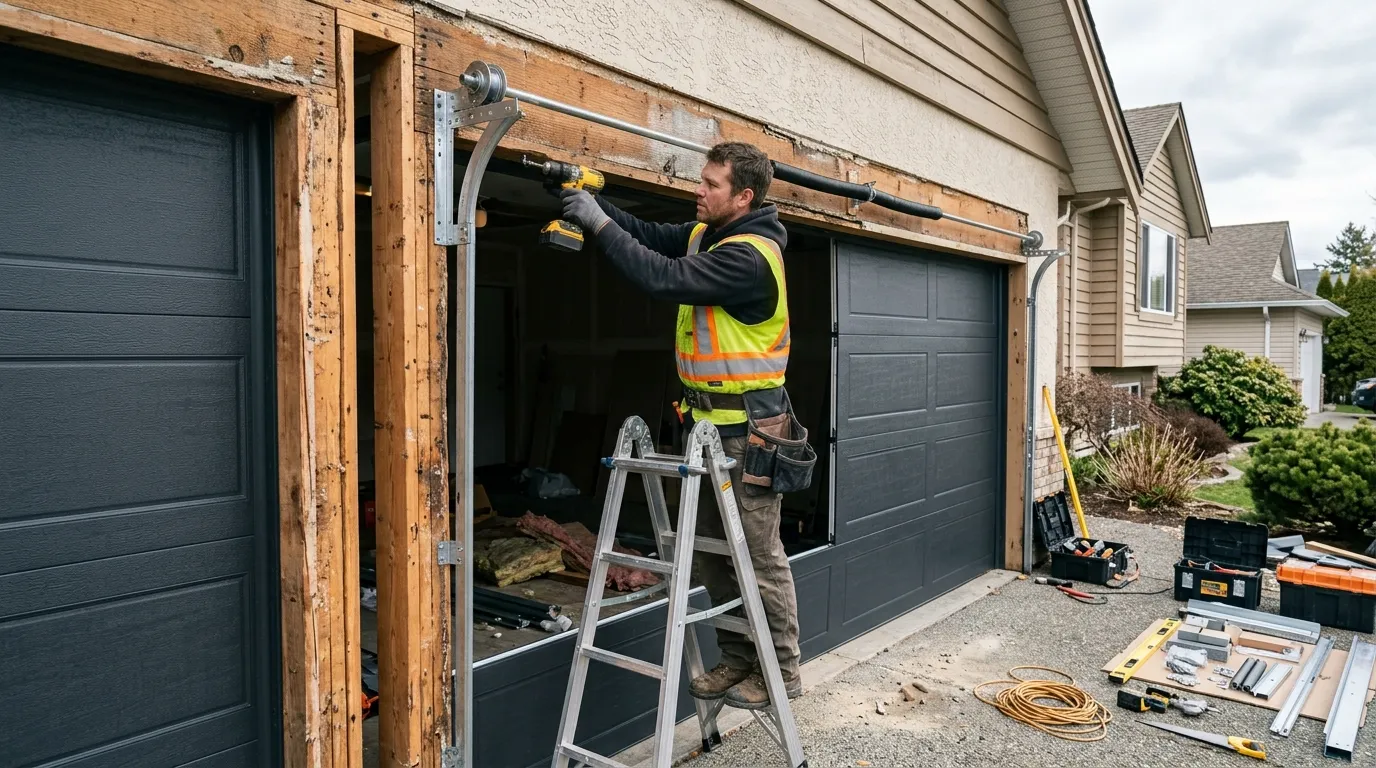
Garage Door Installation
New sectional doors sized and installed for the housing stock actually built in this area.
Learn more →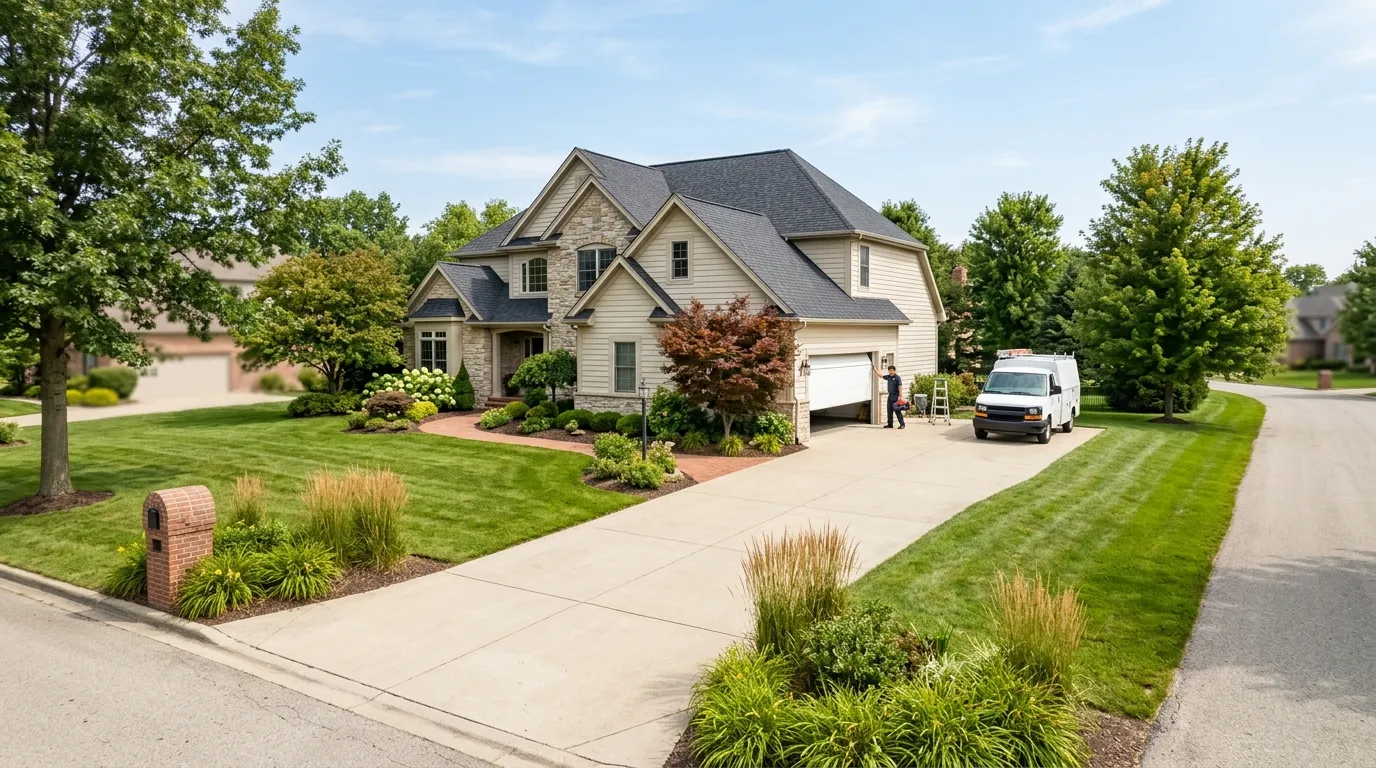
Garage Door Service
Tune-ups, lubrication, and safety checks that catch a small problem before it becomes a service call.
Learn more →Frequently Asked Questions
Does a detached garage door wear out faster than an attached one in Annapolis?
Often, yes. A detached garage has no shared wall with the house, so it takes the full swing of our cold-moderate winters on every side. Springs stiffen, seals crack, and hardware corrodes sooner than on an attached garage that stays a bit warmer from sitting next to conditioned living space.
My house was built in the 1980s - does that tell you anything about the garage?
Some. Housing across the areas we cover mostly dates to the 1980s and 90s, and by then attached garages were far more common than detached ones. If your house fits that build era, the door hardware is likely tied into the same framing as the rest of the house rather than standing alone.
Is it worth replacing an old detached garage door or just repairing it?
Depends on the door and what's actually broken. A worn seal or a stretched spring is usually a repair. A bowed header or a door frame that's shifted independent of the house is a bigger conversation. We'd need to see it in person - general age alone doesn't settle the question.
Have a Door That Needs a Second Opinion?
Call and describe what it is doing - we will tell you what it likely is.