
Annapolis Garage Door Guide
Replacing Your Garage Door in Annapolis, Maryland
Most houses in the Annapolis service area date to the 1980s and 90s, which means original doors and openers are aging out together. Here's what that means for you.
- Licensed & Insured
- Same-Area Service Calls
- Upfront Pricing
The Problem
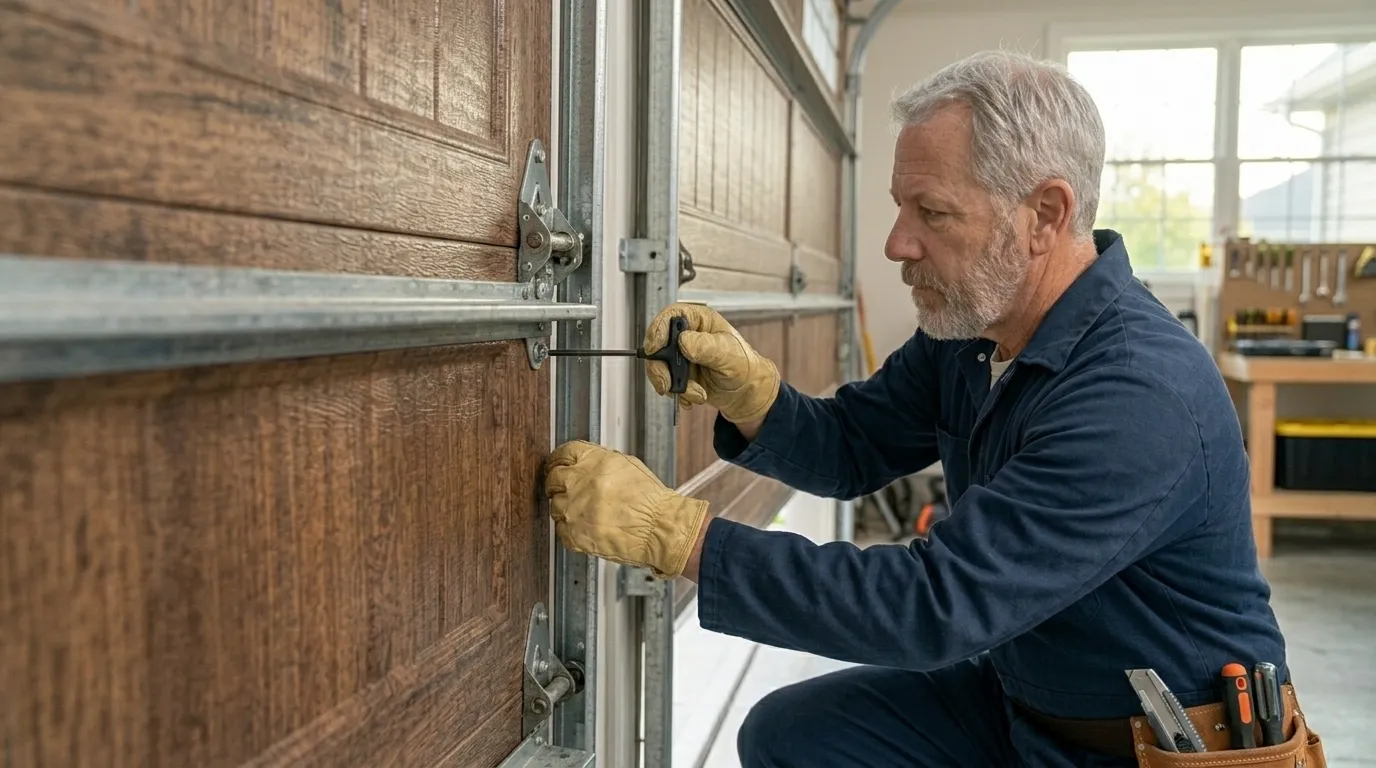
Housing across this service area went up mostly between 1955 and 2008, with the median build year landing around 1985. That's not a small range, but the bulk of it clusters in the 1980s and 90s across the 47 named subdivisions and communities we cover. What that means in practice: a lot of doors, tracks, and openers installed with the original build are now 30 to 40 years old, and they're failing around the same time because they went in around the same time.
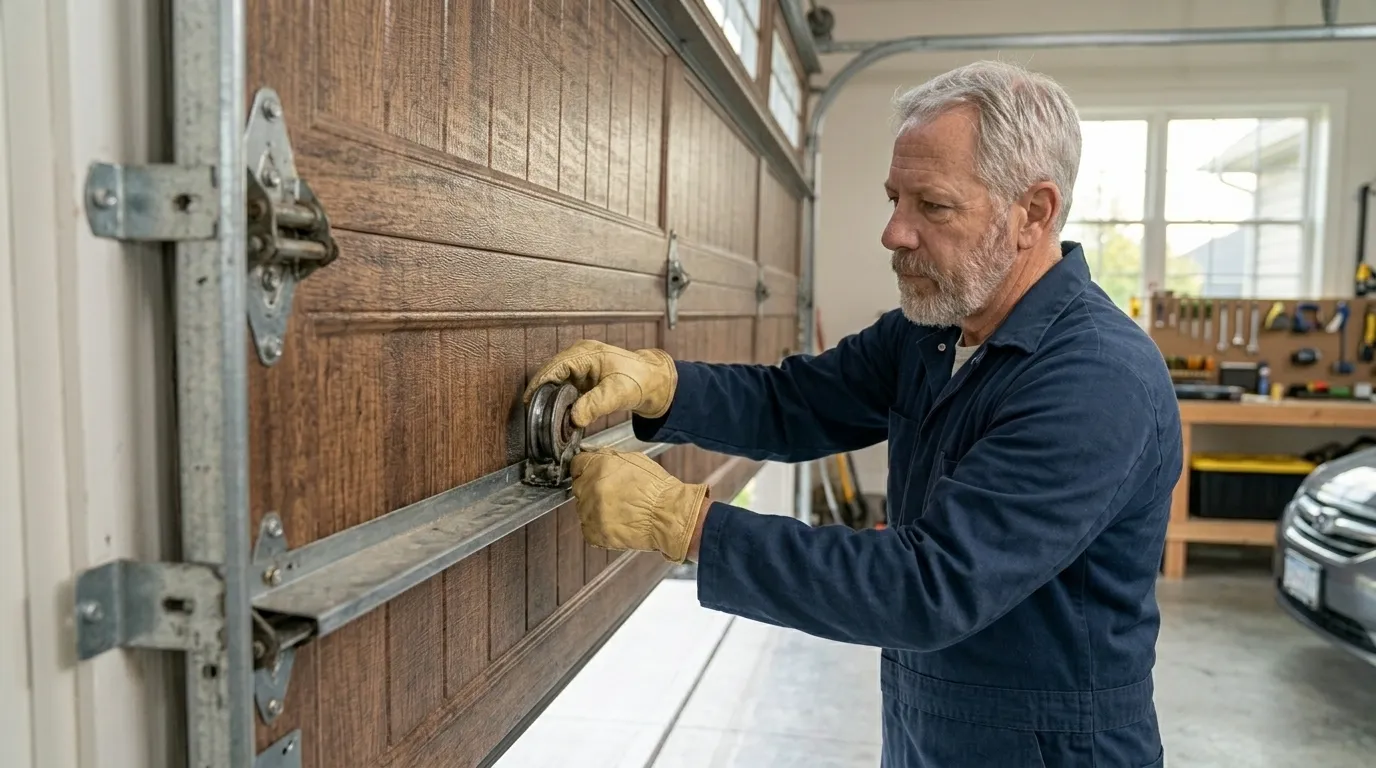
When a door from that era stops working, the fix isn't always simple. Panel styles from the mid-80s don't always match what's stocked today, and openers from that period often use chain-drive units with parts that have been discontinued.
A torsion spring is a torsion spring no matter the decade, but the drum size, cable length, and mounting brackets on a 1987 door aren't guaranteed to match what a supplier carries in 2024. That's the gap that turns a repair call into a replacement conversation more often here than it would in a neighborhood built last year.
Checking It Yourself
Before you call anyone, look at three things. First, the springs above the door - if you see a gap in the coil where it's separated, that's a broken torsion spring, and it's not a DIY fix; the tension involved can hurt you.
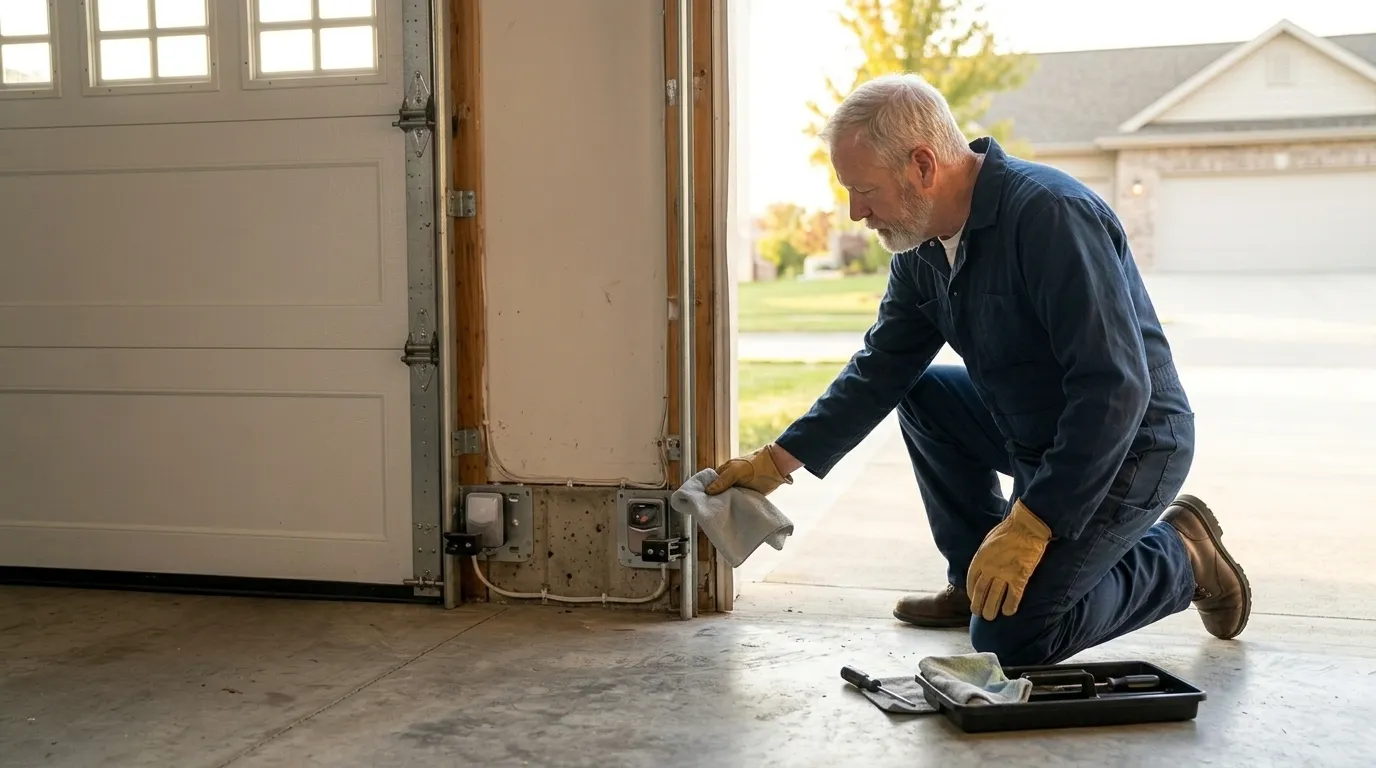
Second, the tracks on either side - in a house from the 1980s-90s stock that makes up most of this area, tracks have often been bent slightly from age or from a door that's been off-balance for years without anyone noticing. Run your hand along them (door closed, opener disconnected) and feel for kinks.
Third, pull the manual release cord and lift the door by hand. It should move smoothly and stay roughly where you leave it, halfway up.
If it slams down or is hard to lift, the springs are no longer doing their job, which is common on doors installed when your house was built if nothing's been replaced since. None of this fixes anything on its own, but it tells you whether you're looking at a spring job, a track problem, or something bigger before anyone shows up.
Doing Nothing For Now
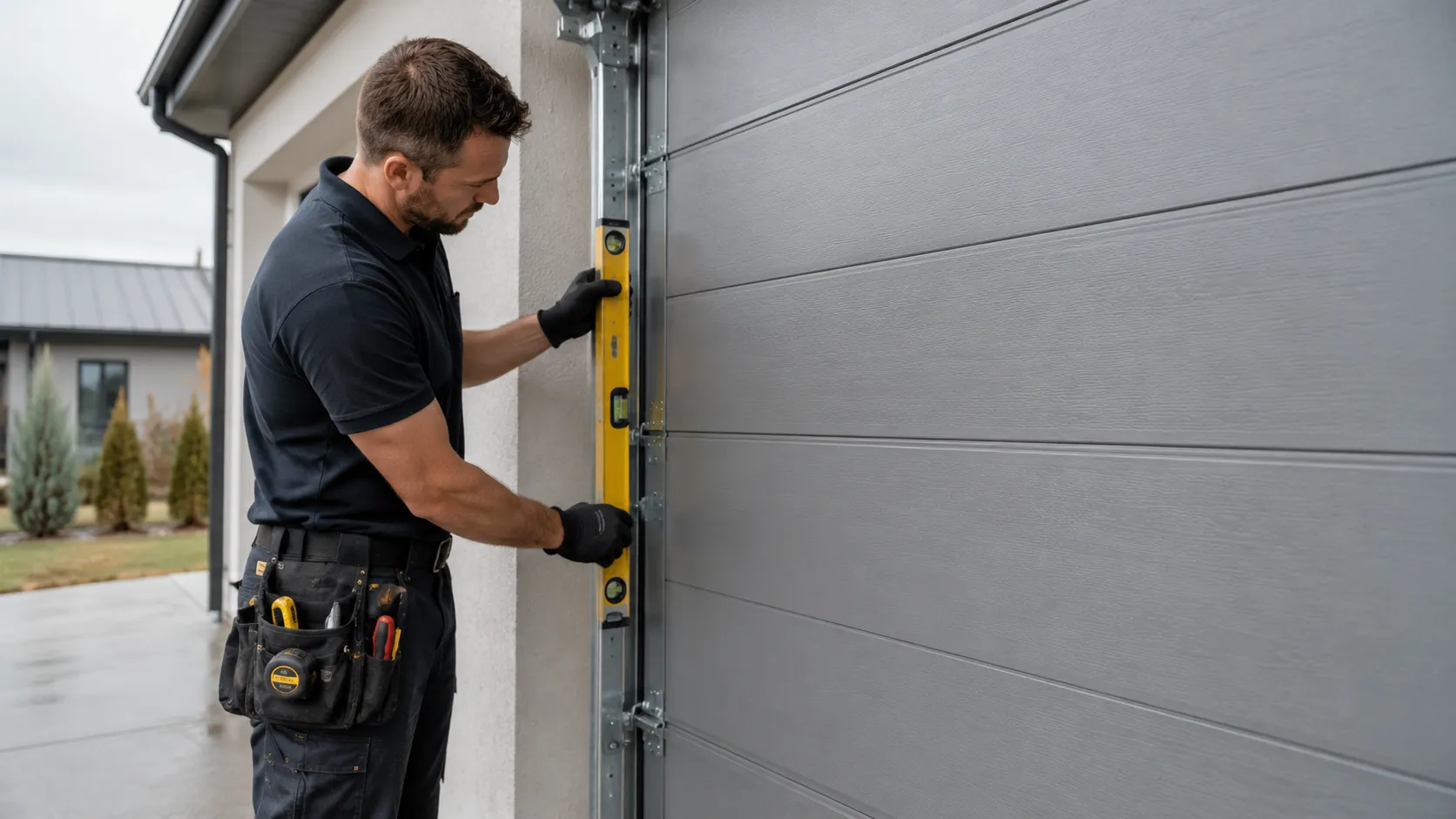
Sometimes waiting is the right call - if the door still opens and closes evenly and nothing's binding, there's no reason to rush a full replacement just because the house is a certain age. But in a cold moderate climate like this one, a door that's slightly out of adjustment tends to get worse over a winter, not better. Cold tightens metal, and a marginal spring or a track that's a few degrees off alignment has less margin for error once temperatures drop.
The honest limitation here: we can't tell you from a description alone whether your door has six months of life left or six years. A door that's merely noisy isn't necessarily a door that's about to fail.
If the opener still lifts it without straining and the springs show no visible gap or fraying, it's reasonable to keep using it and put money toward it only when something actually breaks. Just don't mistake noise for time - the two aren't the same thing, and putting off a spring replacement past the point of failure usually means an emergency call instead of a scheduled one.
How Local Conditions Play In
This is a cold moderate climate band, which means the doors here deal with real freeze-thaw cycling but not the extremes you'd get further inland or further north. That matters for weatherstripping and bottom seals more than it matters for the door panel itself - rubber seals harden and crack under repeated cold snaps, and a door that seals fine in July can whistle air through by February.
Across the service area - Parole, Edgewater, and Mayo within 3 to 5 miles, out through Arnold, Riva, Crownsville, and Cape St. Claire, and further to Severna Park, Crofton, and Pasadena - the housing stock is similar enough that the same problem shows up on the same schedule: doors and openers installed in the 1980s-90s building wave are hitting the point where seals, springs, and drive gears wear out around the same time. With roughly 96,266 owner-occupied houses in a service area of about 192,222 households, and a median household income of $123,176, replacement is often a reasonable option people choose over patching an old door piece by piece, rather than a last resort.
How We Can Help
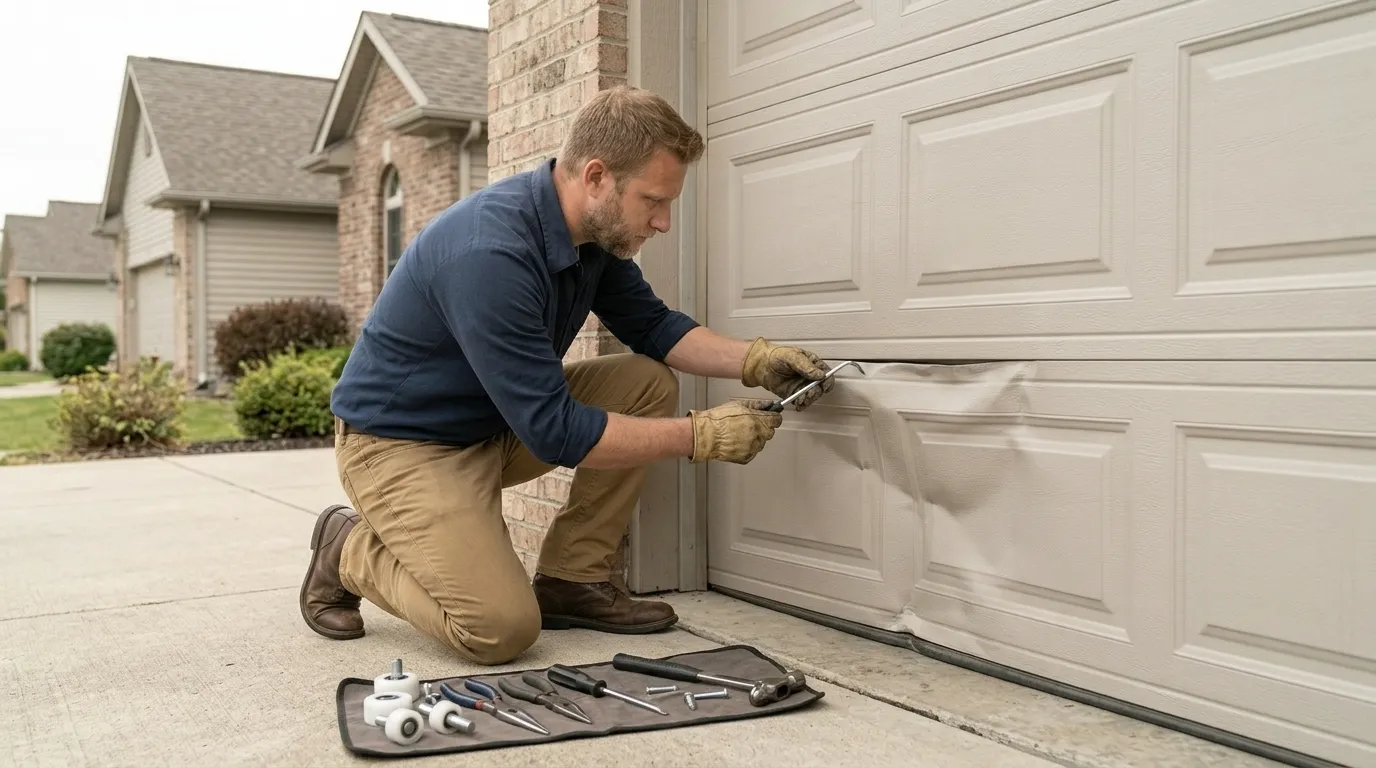
Garage Door Repair
Springs, cables, tracks, rollers, and openers fixed by a tech who explains the problem before touching anything.
Learn more →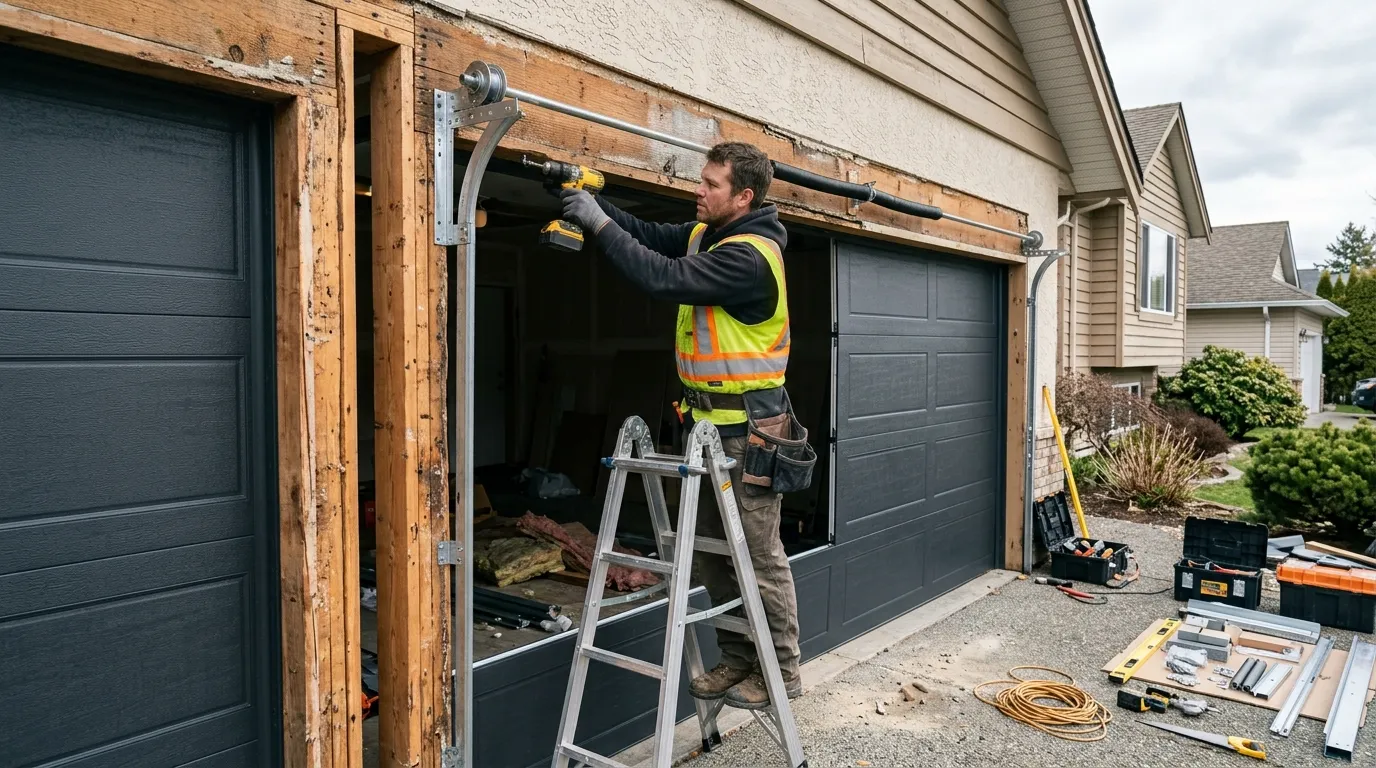
Garage Door Installation
New sectional doors sized and installed for the housing stock actually built in this area.
Learn more →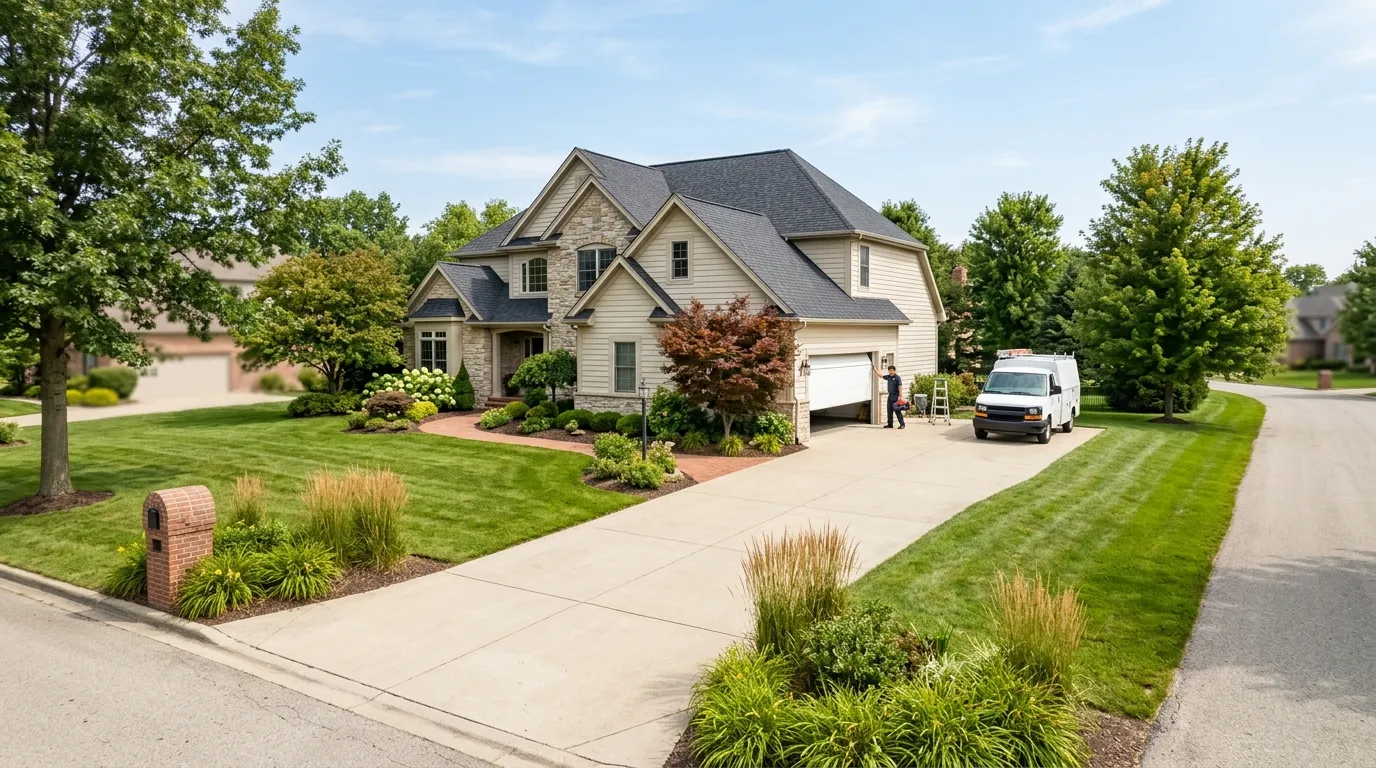
Garage Door Service
Tune-ups, lubrication, and safety checks that catch a small problem before it becomes a service call.
Learn more →Frequently Asked Questions
How old does a garage door have to be before replacement makes more sense than repair?
There's no fixed number, but doors from the 1980s-90s building wave that makes up most of this area's housing are commonly at or past that point. If the opener is original too and parts are hard to source, replacing both together often costs less hassle than repairing one and waiting on the other to fail.
Does the cold here actually affect garage doors much?
This area sits in a cold moderate climate band - real freeze-thaw cycling, not extreme cold. It's harder on weatherstripping and seals than on the door panel itself. A seal that's fine in summer can crack and let drafts through by winter if it's already a few years old.
My house was built in the 1980s - is the original door still up to code?
Housing in this service area was mostly built between 1955 and 2008, with a lot of it clustered in the 1980s and 90s. Code has moved on since then in ways that don't always require a retrofit, but if you're replacing a door anyway, it's worth asking what's changed since your house went up.
Have a Door That Needs a Second Opinion?
Call and describe what it is doing - we will tell you what it likely is.