Service
Garage Door Opener Repair Around Annapolis
Opener repair for Annapolis homes built 1955-2008, where aging chain drives and cold-damp winters wear down circuit boards and gears. Same service area, real fix.
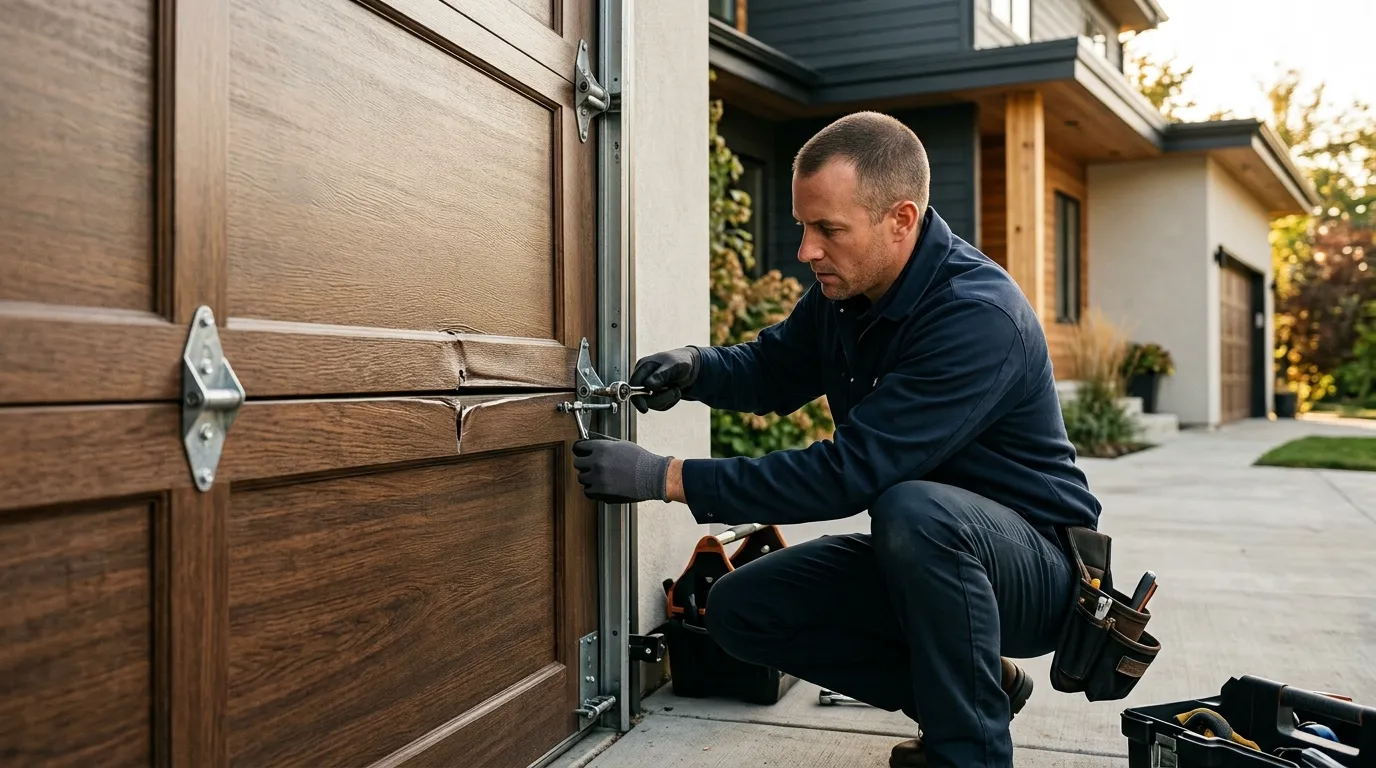
What Happens When You Call
-
1
Call or Request a Quote
Tell us what the door is doing and roughly how old the house is - that alone points us toward the likely part before a truck leaves.
-
2
On-Site Diagnosis
A tech checks the spring, cables, tracks, and opener in person and tells you plainly what is actually wrong.
-
3
Straight Price, No Surprises
You get a number before any work starts. It covers parts and labor, nothing added after the fact.
-
4
Fixed the Same Visit
Most repairs are done in one trip. If a part needs sourcing, we tell you that upfront instead of guessing.
The Symptom
You hit the button and nothing happens, or the opener hums but the door doesn't move. Sometimes it's a light that blinks a code you can't decode, sometimes it's a door that opens halfway and reverses on its own. Around here, the age of the opener itself is usually the first clue.
Homes across this service area were built mostly between 1955 and 2008, with the bulk going up in the 1980s and 90s, which means a lot of original or first-replacement openers are now pushing 25 to 40 years old. Chain-drive units from that era rely on gears, capacitors, and circuit boards that were never designed to last forever, and most of them are well past the point where a part failure is a surprise. If your opener is the same age as the house, the fix usually isn't a setting - it's a worn component that finally gave out.
What the Fix Involves
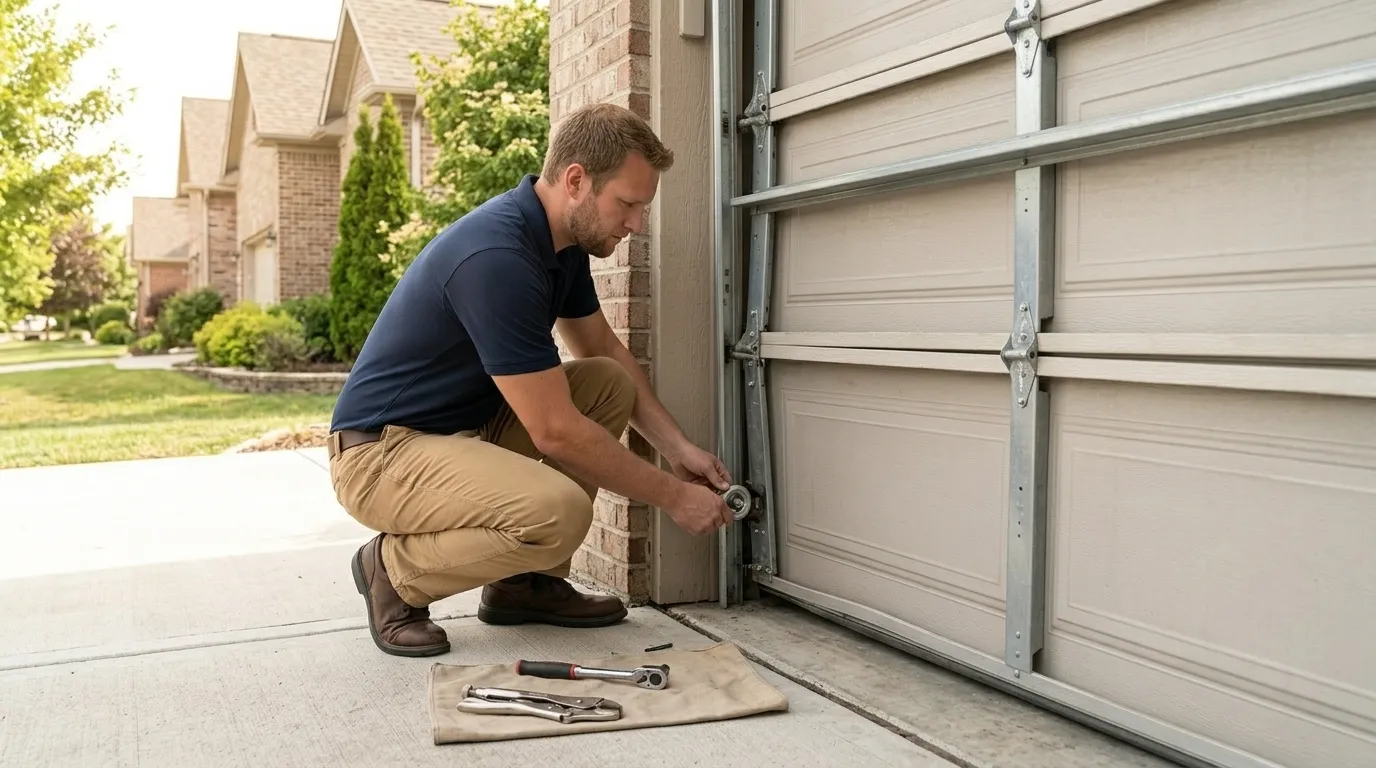
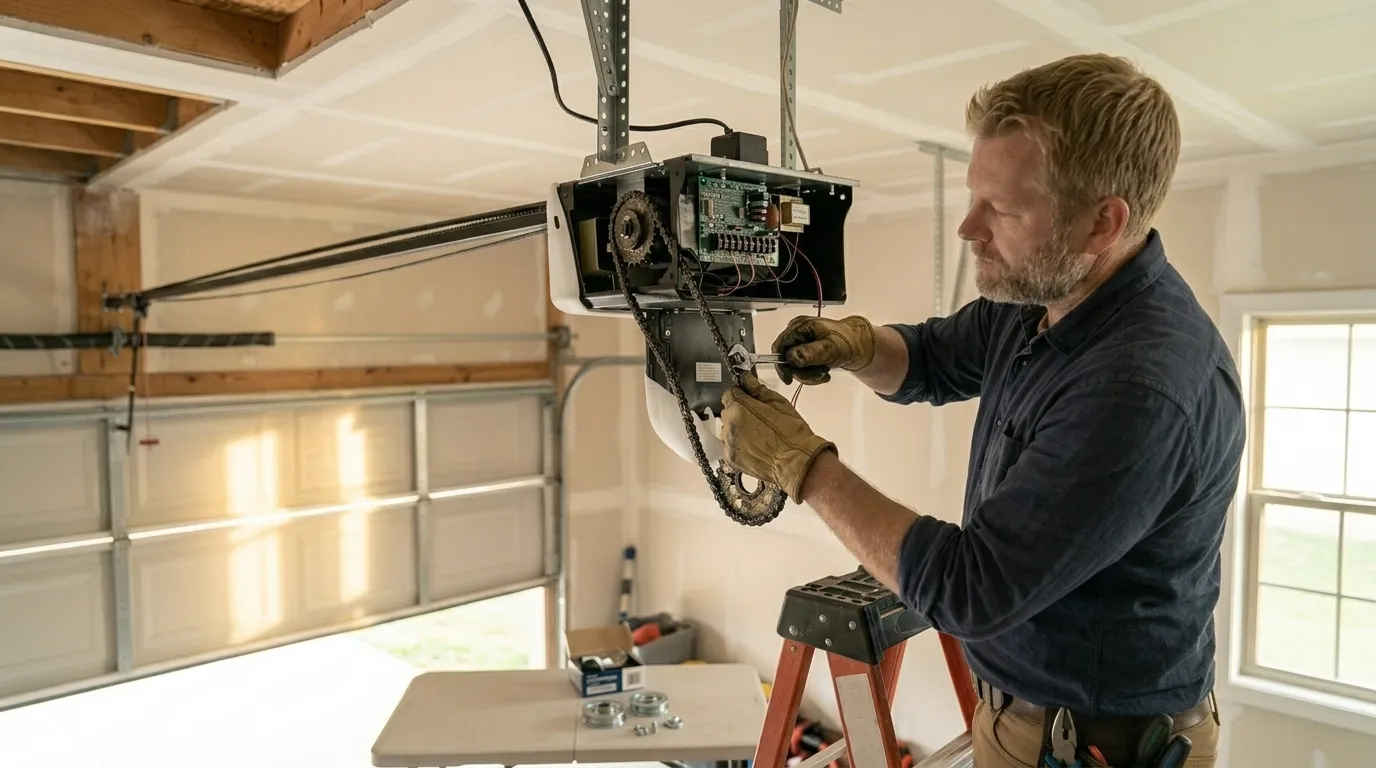
We start by ruling out the cheap stuff: dead remote batteries, a tripped breaker, a photo-eye sensor knocked out of alignment. That takes five minutes and rules out half the calls we get. If it's not that, we're into the opener itself - checking the logic board for a burned capacitor, testing the drive gear for stripped teeth, checking the wiring harness for corrosion.
Gear-and-sprocket kits are a common fix on older chain-drive units; a full circuit board swap or motor replacement is next if the board itself is fried. We also check the wall control and safety sensors, since a nuisance reversal is often a sensor issue that gets blamed on the opener. On units from the 1980s and 90s stock common across this area, parts availability varies - some manufacturers still stock boards for older models, some don't, and when they don't, replacement is the honest answer instead of a repair that won't hold.
The Cost of This Job
We're not going to give you a number here, because opener repair costs swing hard depending on what's actually wrong - a sensor realignment is a different job than a motor and logic board replacement, and parts availability on older units changes the math too. What we can tell you is that with median household income across this service area sitting around $123,000 and roughly 96,266 owner-occupied houses in the mix, we see a wide range of opener ages and setups, from original 1980s chain drives to newer belt-drive units with battery backup. That range is exactly why we quote after we've actually looked at the unit, not before.
What Causes It Around Here
This region sits in a cold-moderate climate band, and that matters more for openers than people expect. Garages here go through real freeze-thaw cycles - cold snaps followed by damp thaws - and that swing is hard on circuit boards, wiring insulation, and the small gears inside a chain-drive unit.
Condensation inside an unheated garage corrodes contacts over years, and a board that's been through thirty winters is a board on borrowed time. Combine that climate stress with the housing stock - most openers here were installed when the house was built or once since, meaning a lot of units are original 1980s-90s equipment - and you get a predictable failure pattern: not sudden, but a slow decline that ends in a dead unit some cold morning when the metal has contracted just enough to bind a worn gear.
Talk to a Technician Before You Book
Describe what the door is doing and get a straight answer on what it likely needs.
Jobs Like Yours
Recent work from this service line.
Why Annapolis Calls Us
Frequently Asked Questions
My opener light blinks but the door won't move. Is that the motor?
Not always. Blinking lights are usually an error code pointing to a sensor misalignment or a limit switch problem, not the motor itself. On older units common in this area, it can also mean a failing capacitor. We check the code against the model before assuming it's the big, expensive part.
Is it worth repairing a 30-year-old opener or should I replace it?
Depends on what's failed. A gear kit or sensor fix on an old unit is often worth it. A fried logic board on a discontinued model usually isn't, since parts may not be available. We'll tell you straight which side of that line your unit is on.
Why does my opener act up more in winter?
Cold-damp cycles are hard on aging circuit boards and metal gears. Contraction and condensation inside an unheated garage speed up corrosion and binding, especially on units already decades old, which is common in homes built here in the 1980s and 90s.
Need Garage Door Opener Repair Around Annapolis?
Call now for straight answers on cost and timing.